Overview
Kenya’s Senate has introduced the Artificial Intelligence Bill, 2026, the country’s first dedicated legal framework for the regulation and governance of AI. The Bill establishes a new regulator, sets rules for how AI systems may be developed and deployed, and creates criminal offences for non-compliance. Once enacted, it will affect any business or individual that develops, deploys, or uses an AI system in Kenya.

2.The New Regulator
This article explores the opportunity, the regulatory framework, and the legal considerations surrounding REITs in Kenya and why forward-thinking investors and developers should start paying attention.

3.What This Means for Your Business
i. Risk Classification
All AI systems will be classified into one of four risk tiers, which determines the level of compliance required:
• Unacceptable Risk — banned outright with no exceptions.
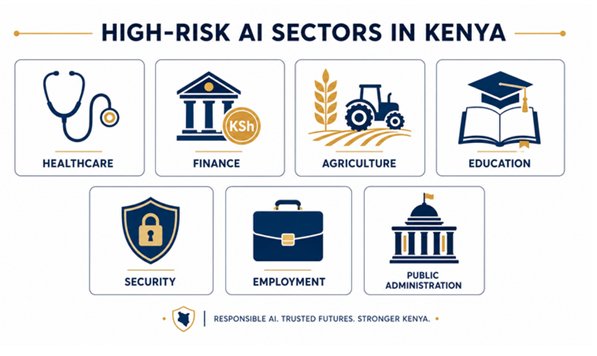
• High Risk — AI used in healthcare, finance, agriculture, education, security, employment, or public administration. Subject to the most demanding obligations.
• Limited Risk — moderate-risk systems, primarily subject to transparency and disclosure requirements.
• Minimal Risk — low-risk systems with minimal compliance obligations.
If You Deploy a High-Risk AI System
Businesses operating in high-risk sectors will be required to:
• Conduct a risk assessment and a human rights impact assessment before deploying the system.
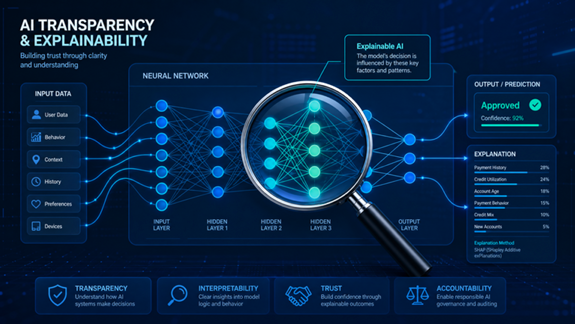
• Ensure the system is transparent and explainable, so that users understand how decisions are made.
• Keep records of data inputs, training datasets, outputs, and performance metrics for at least five years.
• Obtain explicit consent and clearly label AI-generated content where the system produces or manipulates images, voice, or likeness.
• Submit annual compliance reports to the AI Commissioner.
ii. Workforce Obligations
Any business introducing an AI system likely to displace workers must conduct a workforce impact assessment and implement reskilling programs in collaboration with government agencies. This applies to any employer automating functions that affect existing roles. ESK ADVOCATES LLP APRIL 2026 eskadvocatesllp.co.ke 4.Key Takeaways The AI Bill 2026 signals a significant regulatory shift for any organization developing, deploying, or using AI systems in Kenya.
iii. Penalties
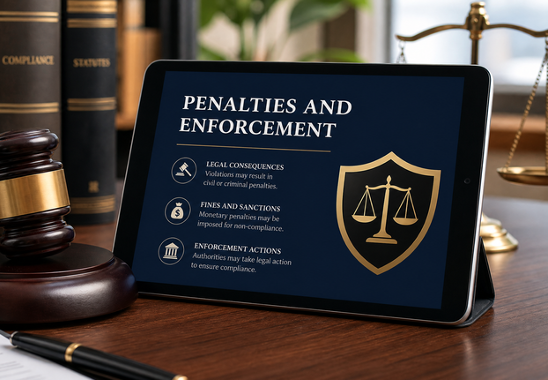
Clients should note the following: Non-compliance carries serious consequences. Major violations such as deploying a prohibited or high-risk AI system without the required assessments shall attract a fine of up to Kshs. 5,000,000 and/or two years’ imprisonment. Transparency and disclosure failures attract a fine of up to Kshs. 1,000,000 and/or six months’ imprisonment. Directors and officers can be held personally liable where they had knowledge of an offence and failed to act.
4.Key Takeaways
The AI Bill 2026 signals a significant regulatory shift for any organization developing, deploying, or using AI systems in Kenya. Clients should note the following:
• Organizations should begin auditing their existing AI systems against the Bill’s risk classification tiers now, ahead of the Act’s commencement.
• Businesses operating in healthcare, finance, education, agriculture, security, employment, or public administration should expect the most intensive obligations including pre-deployment impact assessments, record-keeping for five years, and annual compliance reporting.
• Any AI product that generates or manipulates images, voice, or likeness will be subject to strict consent and labelling requirements with criminal sanctions for non-compliance.
• All county and national government bodies using AI must comply with the Act in full. Non-compliant public sector AI use is a criminal offence.
• Employers introducing AI that may displace workers must conduct impact assessments and implement reskilling programs in partnership with government agencies.
• The sandbox mechanism offers an avenue for businesses to test innovative AI solutions in a supervised environment clients in the innovation and technology sector should monitor sandbox eligibility criteria once the Commissioner is appointed.
• The Act will be reviewed every three years to keep pace with technological change, meaning compliance obligations may evolve.
5.How ESK Advocates LLP Can Help
The AI Bill introduces a new layer of legal and regulatory obligations that will require careful navigation. ESK Advocates LLP is well positioned to guide your business through this transition in the following ways;
· AI Compliance Audits — reviewing your existing and planned AI systems to determine their risk classification and the compliance obligations that apply to your business.
· Impact Assessments — advising on and preparing the risk assessments and human rights impact assessments required before deploying high-risk AI systems.
· Regulatory Engagement — representing your interests before the Office of the AI Commissioner, including in enforcement proceedings, investigations, and sandbox applications. · Contract and Policy Review — updating your internal AI policies, data processing agreements, and vendor contracts to align with the new law.
· Workforce Advisory — advising employers on workforce impact assessment obligations and the legal framework for reskilling and transition programs.
· Ongoing Compliance Support — providing continued legal support as regulations and guidelines are issued under the Act and as the law evolves through its three-year review cycle.
To discuss how the AI Bill may affect your business, please contact ESK Advocates LLP.
Article By :
Joyce Nduta
Holding-Over Associate