1.Introduction : The Quiet Revolution in Kenya’s Property Market

For decades, real estate in Kenya has followed a familiar script: acquire land, build, wait for appreciation, or lease for income. It is a model built on patience, capital, and often significant risk. But the market is changing: rising interest rates, tightening liquidity, shifting investor expectations, and evolving regulatory frameworks are forcing a rethink of traditional property ownership. Investors are becoming more cautious. Developers are facing financing constraints. Institutional capital is seeking structured, regulated investment vehicles.
In this changing landscape, Real Estate Investment Trusts (REITs) are emerging not just as an alternative- but as a potential structural shift in how real estate is financed and owned in Kenya. Yet despite their promise, REITs remain underutilised. Why? The answer lies in complexity particularly around legal structuring, regulatory compliance, and governance. 2.REITs: More than just another Investment Vehicle At their core, REITs transform real estate from a fixed asset into a tradable investment. Rather than owning property directly, investors buy units in a trust that owns and manages real estate assets.
This creates:
i. Liquidity in traditionally illiquid assets;
ii. Diversification across multiple properties;
iii. Access to professional property management; and Lower capital entry thresholds
1.Introduction : The Quiet Revolution in Kenya’s Property Market REITs effectively democratise real estate investment, which concept has transformed property markets globally. This article explores the opportunity, the regulatory framework, and the legal considerations surrounding REITs in Kenya and why forward-thinking investors and developers should start paying attention.
2.REITs: More than just another Investment Vehicle
At their core, REITs transform real estate from a fixed asset into a tradable investment. Rather than owning property directly, investors buy units in a trust that owns and manages real estate assets.
This creates:
i. Liquidity in traditionally illiquid assets;
ii. Diversification across multiple properties;
iii. Access to professional property management; and Lower capital entry thresholds
1.Introduction : The Quiet Revolution in Kenya’s Property Market REITs effectively democratise real estate investment, which concept has transformed property markets globally.
The case for REITs in Kenya has never been stronger for these reasons: Capital constraints are reshaping i. development Developers are increasingly struggling to secure traditional financing and construction costs continue to rise while banks are tightening lending conditions. REITs provide an alternative which allows developers to:
Raise capital from institutional investors
Spread risk
Unlock value from completed developments
This is particularly relevant for mixed-use developments, student housing, industrial parks and affordable housing

ii. Institutional investors are looking for yield Pension funds, insurance companies, and asset managers are actively seeking stable, income-generating investments. For institutional investors, REITs offer regulated exposure to real estate without operational risk.
REITs provide:
Predictable income Long-term capital growth
Portfolio diversification
iii. Real Estate needs liquidity Traditional property investments are illiquid and slow to exit.
REITs, particularly those listed on the Nairobi Securities Exchange, allow investors to buy and sell units, creating liquidity in the real estate market. This shift has the potential to fundamentally change how real estate is viewed as an asset class.

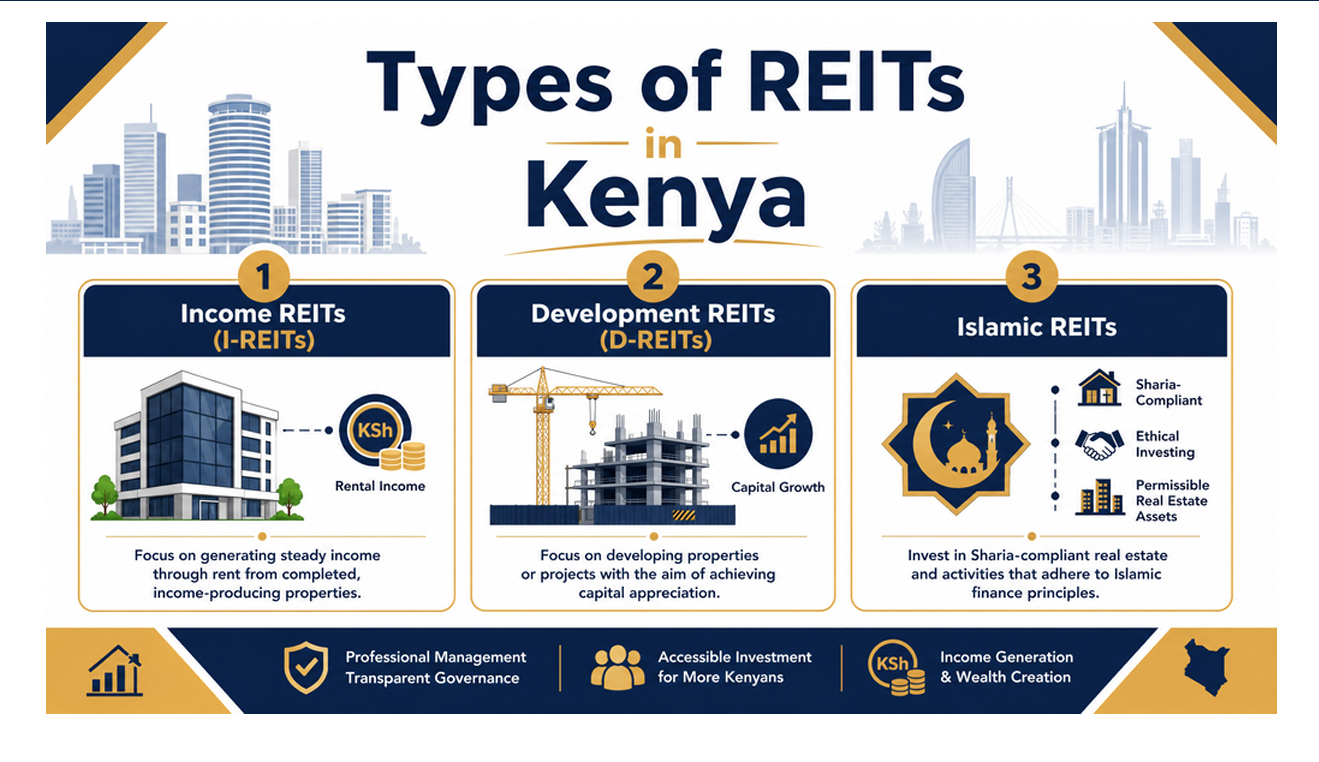
3.Types of REITs in Kenya: Understanding the Structures Kenya’s regulatory framework recognises three main REIT structures:
i. Income REITs (I-REITs)
These REITs invest in income-generating properties, such as: Office buildings, Shopping malls, Residential rental developments and Warehousing facilities. Investors receive regular income distributions from rental yields. These structures typically appeal to institutional and conservative investors.
ii. Development REITs (D-REITs)
Development REITs fund construction and development projects, Residential developments estates, and including: Mixed-use Commercial complexes. Returns are generated through: sale of units and capital appreciation. These structures offer higher returns but higher risk.
iii. Islamic REITs
Kenya also allows Sharia-compliant REITs, which exclude: interest-based financing and certain restricted sectors. These structures create opportunities regional and Middle Eastern capital
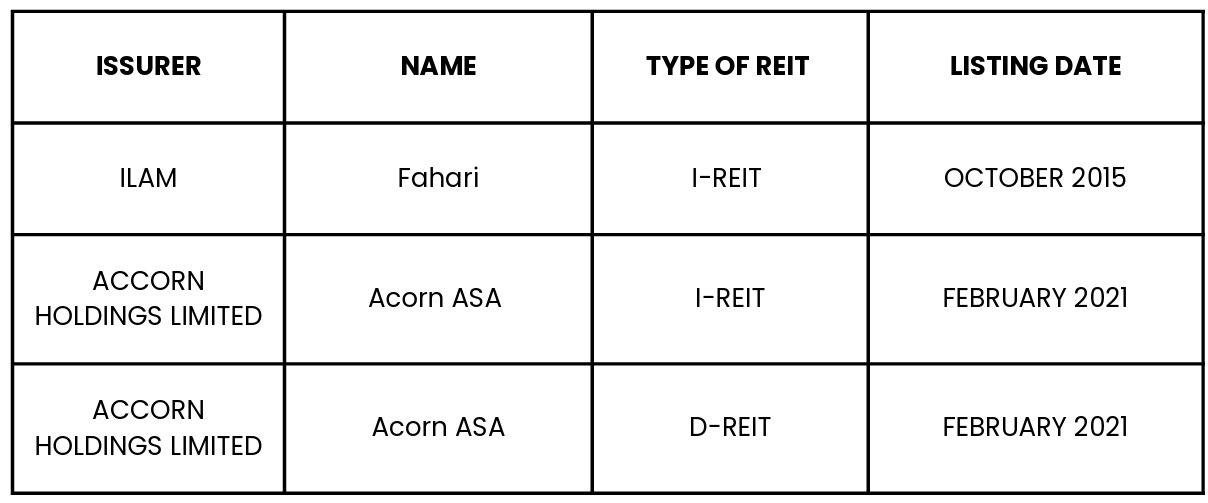
Current Kenyan REITs
4.The Legal Architecture of REITs in Kenya In Kenya,
REITs are regulated by the Capital Markets Authority (CMA), under the framework established by the Capital Markets Act and the Capital Markets (Real Estate Investment Trusts) (Collective Investment Schemes) Regulations. This regulatory oversight ensures: Investor protection, Governance transparency and Market stability. However, the above also introduces compliance obligations that require careful legal navigation.

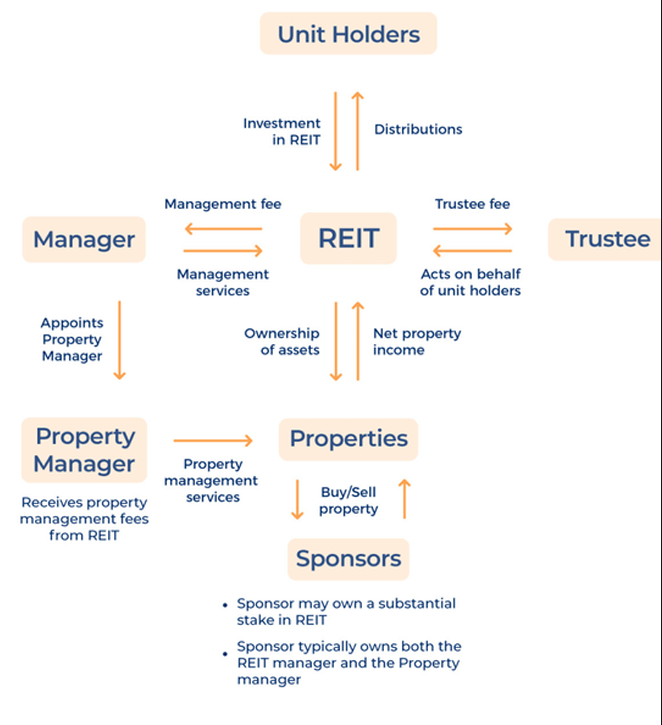
REITs are not simple investment vehicles. They require a multi-layered legal structure, typically involving:
i. Promoter
This is party involved in setting up a real estate investment trust scheme. The promoter is regarded as the initial issuer of REIT securities and is involved in making submissions to the regulatory authorities to seek relevant approvals.
ii. Trustee
The Trustee is a person appointed under the trust deed as a trustee of the REIT and any investee trust. The Trustee may be a bank, a bank subsidiary or a licensed company. A trustee shall—
be independent of the promoter, the REIT manager and any property manager, valuer or project manager certifier of the real estate investment trust scheme;
be licensed by the Authority as a REIT trustee;
be independently audited; and
have a minimum issued and paid-up capital and non-distributable capital reserves of at least one hundred million shillings;
Holds assets on behalf of investors; Ensures regulatory compliance; Oversees governance of the REIT.
iii. REIT Manager The REIT Manager is a company incorporated in Kenya and licensed by the Authority to provide real estate management services in respect of a REIT. In most cases, the REIT manager is appointed by the Trustee with the prior approval of the Capital Markets Authority.
The REIT manager is tasked to undertake the following duties: acquire, manage, maintain and dispose assets of the scheme; account to the trustee and the REIT securities holders for any loss suffered by the scheme; maintain on behalf of the trustee, proper accounting records and other record to enable an accurate view of the fund to be formed; obtain tenants and manage tenancy arrangements; carry out or cause to be carried out all property management functions in compliance with Estate Agents Act; implement approved budgets, capital works and maintenance programmes. iv. Property Manager The Property Manager is appointed by the REIT manager with approval of the Trustee and shall be supervised by the REIT manager to ensure their compliance with the terms of the scheme documents and law. The Property Manager may: Handle tenant relationships; Oversee maintenance; Manage operational performance.
5.Tax Efficiency: One of REITs’ Biggest Attractions REITs benefit from favourable tax treatment in Kenya. These include: i. Corporate Tax Efficiency MAY 2026 eskadvocatesllp.co.ke REITs may benefit from tax transparency structures, allowing income to pass through to investors. This enhances investment returns. ii. Stamp Duty Considerations Property transfers into REIT structures may qualify for stamp duty relief, subject to compliance. This is particularly attractive for portfolio consolidation, institutional investments and large-scale developments. iii. Withholding Tax Investor distributions may attract withholding tax, depending on investor type, residency status and structure.
6.Conclusion:
From Ownership to Investment- A Market Evolution REITs represent more than a financial instrument. They signal a shift in how real estate is owned, financed, and traded. For investors, REITs offer diversification and liquidity. For developers, they unlock capital. For institutions, they create stable returns. But unlocking these benefits requires careful legal structuring and regulatory compliance. As Kenya’s real estate sector evolves, REITs are poised to become a central pillar of the market. The opportunity is not just to participate; but to lead.
How ESK Advocates LLP Can Support REIT Clients MAY 2026 eskadvocatesllp.co.ke ESK Advocates LLP provides strategic legal support across the REIT lifecycle: Structuring and Formation REIT structuring Trust documentation SPV structuring Regulatory Compliance CMA approvals Governance frameworks Ongoing compliance advisory Transaction Advisory Property acquisitions Development structuring Joint ventures Tax and Risk Advisory Tax structuring Stamp duty planning Risk mitigation ESK Advocates LLP stands ready to guide investors, developers, and institutions through this evolving landscap
Article By: Teresia Wamaitha
Managing Partner