
A TURNING POINT FOR KENYA’S CARBON MARKET
Introduction
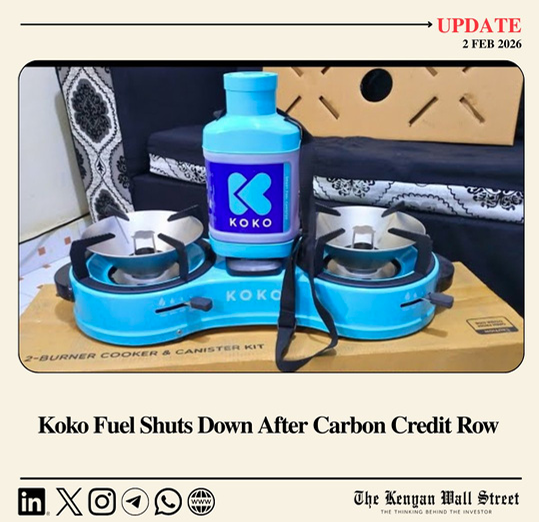
KOKO Networks built a bold business model around bioethanol cooking fuel distributed through a nationwide network of smart dispensers. Millions of Kenyan households used its clean-cooking solution as an alternative to charcoal.
However, the company’s financial model relied heavily on generating and selling carbon credits linked to the emissions reductions achieved through cleaner cooking technologies. When regulators declined to authorize the scale of carbon credits the company sought to issue, the model became financially unsustainable, ultimately contributing to the firm’s shutdown. While the circumstances are complex, the broader implications for the Kenya carbon credits sector are significant.
This article highlights three important lessons: i. Carbon credits are now subject to increasing regulatory scrutiny ii. Measurement and verification standards are becoming more stringent Commercial models must align with national climate policy and international carbon market rules For investors and climate innovators, the message is clear: carbon projects must be structured as regulatory projects first and commercial projects second.
Kenya Carbon Credits: A Rapidly Evolving Regulatory Framework
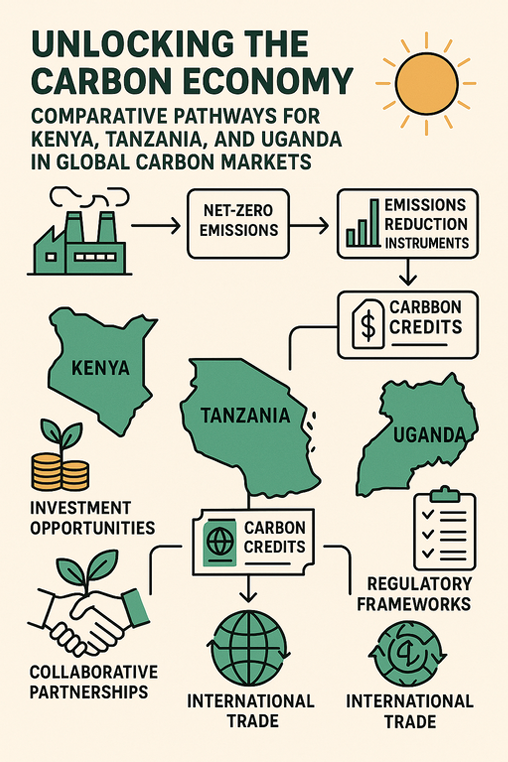
Kenya has taken decisive steps to establish a formal legal framework governing the generation and trading of carbon credits. The Climate Change (Amendment) Act 2023 introduced mechanisms enabling Kenya to participate in international carbon markets under the Paris Agreement. The legislation empowers the government to authorize carbon projects and enter into agreements for emissions reduction trading. Building on this framework, the Climate Change (Carbon Markets) Regulations 2024 now provide operational rules governing carbon project development in Kenya.
Key features of the regulatory framework include: i. National Authorization of Carbon ProjectsAll carbon projects must obtain formal approval before generating tradable carbon credits. ii. Community Benefit-Sharing RequirementsKenya has introduced progressive rules requiring revenue sharing with local communities, particularly for land-based carbon projects. iii. National Carbon Credit Registry- The government is establishing a national registry to track carbon credits and prevent double counting. iv.
Alignment with the Paris Agreement- The framework enables Kenya to participate in international carbon trading mechanisms under Article 6 of the Paris Agreement. v. Primary agencies include the State Department of Environment which shall oversee Climate Directorate and carbon project approvals and the National Environment Management Authority (NEMA) for environmental compliance. The National Treasury may later manage auction revenue if a cap-and-trade scheme is introduced. For international investors, developments significantly enhance the credibility and bankability of Kenya carbon credit projects.
The International Dimension: Lessons from the UK Carbon Market
Kenya’s regulatory approach reflects a broader global trend toward more structured carbon markets. A useful comparison can be drawn with the United Kingdom. The UK operates the UK Emissions Trading System (UK ETS) — a cap-and-trade scheme that sets limits on greenhouse gas emissions from major industries and allows companies to trade emissions allowances. The UK Emissions Trading Registry is a secure online application “like a bank account” for allowances.
Operator Holding Accounts (OHAs) and Aircraft Holding Accounts (AOHAs) store allowances and verified emissions data. Trading accounts (unlinked to compliance) allow market trading.The UK also maintains a Kyoto Protocol Registry, now used for international units. This robust digital registry underpins UK ETS integrity.
Beyond the compliance market, the UK government has also introduced Principles for Voluntary Carbon Market Integrity aimed at strengthening the voluntary carbon market, including: i. enhanced verification and integrity standards for carbon credits ii. regulatory oversight to prevent greenwashing transparency rules for carbon credit transactions The UK is positioning itself as a global hub for climate finance and carbon trading.
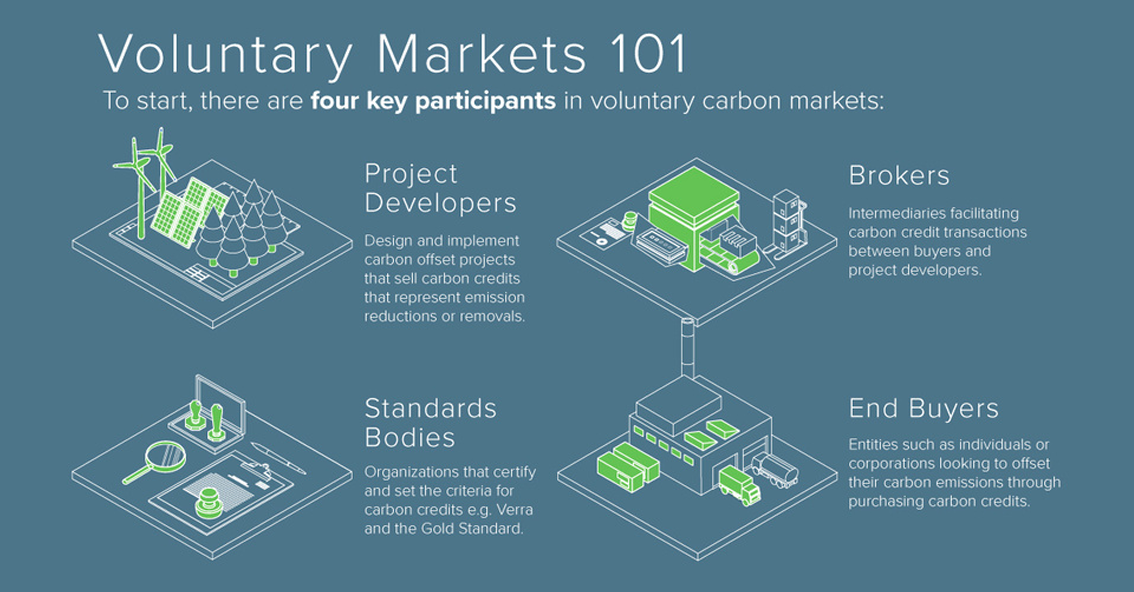
Importantly, many corporations participating in these markets seek high-quality carbon credits from international projects, particularly in emerging markets. This creates a direct commercial link between Kenya’s carbon projects and international carbon markets. This intersection between domestic carbon regulation and international climate finance is where significant commercial opportunities will emerge.
Comparative Study and Attendant Risks
Key contrasts between the UK and Kenyan systems (and associated risks) include:
i. Registry & Infrastructure:
The UK ETS has a mature digital registry for allowances and units. Kenya’s registry is newly formed and untested. Risk: Credit-tracking may be fragmented or non-transparent infrastructure is built. until digital
ii. Compliance vs Voluntary Markets:
UK compliance (ETS) is well-defined; Kenya currently has no nationwide cap-andtrade, relying on voluntary trades. Risk: Without a compliance market or price floor, Kenyan credits may lack guaranteed demand/pricing, hurting confidence. investor
iii. Monitoring, Reporting & Verification (MRV):
MRV refers to Measurement, Reporting, and Verification, a crucial framework under the United Nation Framework Convention on Climate Change (UNFCCC) used to track greenhouse gas (GHG) emissions, mitigation actions, and climate support and ensures transparency and accuracy in carbon markets and national climate pledges. UK MRV procedures are codified under EU-derived regulations. Kenya must develop its own MRV protocols (likely based on UNFCCC/CDM rules) and capacity for verification. Risk: Weak MRV could undermine credit integrity and investor trust.
i. Permanence/Reversals:
UK allowances (ETS) assume permanent emission reductions. Kenya’s regulations require projects to account for reversals. The UK voluntary principles also insist on buffers/insurance. Risk: Kenya must define how to handle reversals (e.g. forest fires); failure could devalue credits.
ii. Double-Counting / Corresponding Adjustments:
The UK registry cleanly tracks units; UK compliance credits are accounted in national inventories. Kenya faces the CORSIA correspondingadjustment issue – its delay was fatal for KOKO Networks. Risk: If Kenya does not commit to clear adjustment rules, international buyers will avoid Kenyan credits to prevent double-counting.
iii. Revenue Sharing / Social Contributions:
Kenyan law mandates local community benefit-sharing for projects; the UK ETS instead funnels revenue to government. Risk: Uncertainty over tax treatment and benefit-sharing could complicate project economics. UK practice suggests transparency in such use.
iv. Legal Certainty & Enforcement:
UK law on carbon is settled and backed by active regulators. Kenya’s regime is nascent. Risk: Ambiguities in draft laws/regulations could lead to disputes. Teresia Wamaitha Managing Partner
v. Investor Protections:
UK issuers and buyers can rely on established contract law and dispute mechanisms. Kenya’s legal frameworks for carbon contracts are undeveloped. Risk: Investors may demand strong arbitration clauses or sovereign guarantees (as KOKO did) to mitigate regulatory risk.
vi. Market Access:
UK projects have direct access to the EU and international markets (e.g. CERs, carbon tax avoidance markets). Kenyan projects currently are limited to voluntary markets or projects with host-country approvals (e.g. CORSIA). Risk: Without bilateral linkages or clear policies, Kenyan developers may miss out on larger carbon flows.
vii. Environmental and Social Governance (ESG) Standards:
The UK government actively promotes high-integrity credits and expects Free, Prior, and Informed Consent and leakage mitigation. Kenya’s laws require community agreements, but enforcement is evolving. Risk: If Kenyan projects neglect social safeguards, they may face reputational or legal challenges internationally.
Investment Opportunities in the Kenya Carbon Credit Market
Despite recent controversies, Kenya remains one of Africa’s most promising jurisdictions for carbon market development.
Several sectors offer strong commercial potential:
i. Renewable Energy Carbon Credits
Kenya’s leadership in geothermal and renewable energy creates opportunities for projects generating carbon offsets linked to clean power generation.
ii. Nature-Based Carbon Projects
Forestry conservation, mangrove restoration and regenerative agriculture initiatives can generate large volumes of carbon credits while delivering biodiversity benefits.

iii. Climate Technology and Carbon Removal
Emerging climate technology companies are exploring innovative solutions including direct air capture and biocharbased carbon removal.
iv. Clean Cooking Projects
Although the KOKO model faced regulatory challenges, clean cooking remains one of the most scalable carbon credit opportunities across Africa. For investors and developers, the Kenya carbon market represents a growing intersection of infrastructure international finance.
Structuring Bankable Carbon Projects in Kenya
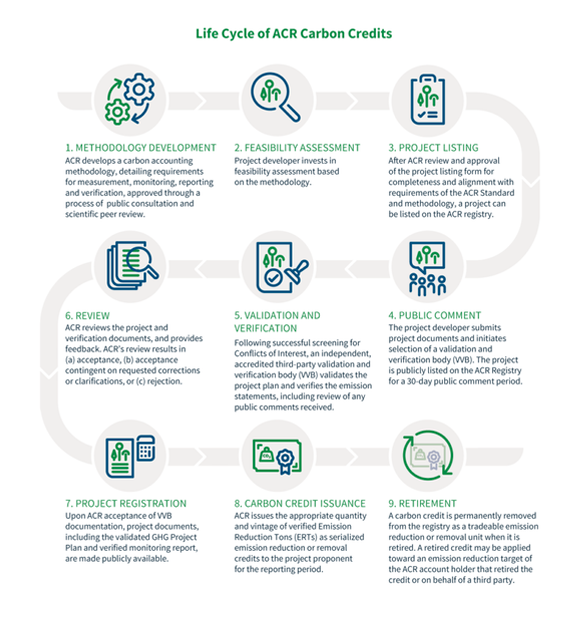
Developing a successful carbon project requires more than technological innovation. Projects must be structured in a way that satisfies regulators, investors and international credit buyers. Critical considerations include:
i. Regulatory Compliance-Ensuring projects meet the approval requirements under Kenya’s carbon market regulations.
ii. Carbon Ownership and Land RightsEstablishing clear legal rights to the carbon credits generated by a project.
iii. Carbon Credit Offtake AgreementsSecuring long-term purchase agreements with international buyers.
iv. Community Structures- Designing Benefit-Sharing transparent arrangements that comply with Kenya’s community participation rules.
v. Investment and Financing StructuresCreating project vehicles that attract institutional and climate finance investors.
The Strategic Role of Legal Advisors in Carbon Markets
As carbon markets become more sophisticated, legal structuring is emerging as a decisive factor in project success.
Carbon projects sit at the intersection of several complex areas of law, including:
i. environmental and climate regulation
ii. cross-border carbon trading rules
iii. project finance and investment structuring
iv. land rights and community benefit agreements
v. International carbon credit purchase contracts Companies entering the Kenya carbon credit market increasingly require advisors capable of navigating these overlapping legal frameworks.
Conclusion
As global demand for high-integrity carbon credits continues to grow, Kenya is emerging as a strategic destination for climate investment. Businesses seeking to enter this market must ensure that their projects are commercially viable, legally robust and aligned with international carbon market standards. With the right legal and strategic guidance, Kenya’s carbon market presents a compelling opportunity for investors and climate innovators alike. Reach out to us for a consultation through our contact details below.
By Teresia Wamaitha
Managing Partner