
3912

COMMERCIAL LEASING & CONTROLLED TENANCY: LESSONS FOR LANDLORDS AND TENANTS IN KENYA

Introduction

Commercial leasing is an indispensable aspect of Kenya’s economy. Every day, businesses enter into leases for shops, offices, restaurants, and other commercial premises, often assuming that the written lease agreement alone defines their rights and obligations. However, one of the most misunderstood areas of Kenyan commercial property law is the distinction between an ordinary commercial lease and a controlled tenancy under the Landlord and Tenant (Shops, Hotels and Catering Establishments) Act, Cap. 301 (“the Act”). This distinction is not merely technical. It determines whether a landlord may freely terminate a tenancy, revise rent or recover possession, or whether such actions are subject to the mandatory statutory safeguards administered by the Business Premises Rent Tribunal (BPRT).

Many costly disputes arise because parties fail to appreciate that the law, rather than the wording of the lease alone, determines whether a tenancy is controlled. Recent decisions of the superior courts have consistently reaffirmed that parties cannot circumvent the protections afforded under Cap. 301 through contractual drafting or self-help remedies. Both landlords and tenants must therefore understand the legal implications of the tenancy they create.

The Legal Framework

  • Commercial leases in Kenya are principally governed by:
  • the Landlord and Tenant (Shops, Hotels and Catering Establishments) Act (Cap. 301);
  • the Land Act, 2012;
  • the Land Registration Act, 2012;
  • the general law of contract;

Controlled Tenancy: The Landlord and Tenant (Shops, Hotels and Catering Establishments) Act

The Act is a statute specifically enacted to protect tenants occupying business premises from arbitrary eviction and unreasonable alteration of tenancy terms while balancing landlords’ proprietary rights through an orderly disputeresolution process. Section 2 of Cap. 301 defines a controlled tenancy as a tenancy of a shop, hotel or catering establishment that:

  • has not been reduced into writing;
  • is reduced into writing for a term not exceeding five years;
  • or although exceeding five years, contains a provision permitting termination (otherwise than for breach) within the first five years.

The above definition demonstrates that the legal character of a tenancy depends on its substance rather than the title given to the agreement. This principle was emphasized by the Court of Appeal in African Universal Merchandise Ltd v Kulia Investments Ltd [1980] eKLR, where the Court held that whether a tenancy is controlled depends upon whether it falls within the statutory definition under Section 2 of Cap. 301, rather than the parties’ subjective intentions. Similarly, in Bachelor’s Bakery Ltd v Westlands Securities Ltd [1982] eKLR, the Court observed that Cap. 301 is a special statute enacted for the protection of certain classes of commercial tenants and that a written lease exceeding five years generally falls outside its scope unless it contains an early termination clause.

Why the Distinction Matters
The legal consequences are significant. Where a tenancy is controlled:

  • the landlord cannot simply terminate the tenancy;
  • rent cannot be varied arbitrarily;
  • statutory notices must be issued in the prescribed form;
  • disputes fall within the jurisdiction of the Business Premises Rent Tribunal; a
  • nd tenants enjoy security pending determination of any reference before the Tribunal.

Conversely, where a tenancy falls outside Cap. 301, the parties’ rights are primarily governed by the lease agreement and the general law relating to contracts and property. Dispute Resolution Forum under Cap 301: Business Premises Rent Tribunal Sections 11 and 12 of Cap. 301 establish the Business Premises Rent Tribunal and confer extensive powers upon it. Among other things, the Tribunal may: determine whether a tenancy is controlled; assess or vary rent; determine the validity of termination notices; order recovery of possession; authorize distress for rent; award costs; and make such further orders as are necessary for the ends of justice. Because Parliament has conferred these powers upon the Tribunal, courts have repeatedly held that parties should first invoke the Tribunal’s jurisdiction where disputes concern controlled tenancies.

Dispute Resolution Forum under Cap 301:

Business Premises Rent Tribunal Sections 11 and 12 of Cap. 301 establish the Business Premises Rent Tribunal and confer extensive powers upon it. Among other things, the Tribunal may:

  • determine whether a tenancy is controlled;
  • assess or vary rent;
  • determine the validity of termination notices;
  • order recovery of possession;
  • authorize distress for rent;
  • award costs;
  • and make such further orders as are necessary for the ends of justice.

Because Parliament has conferred these powers upon the Tribunal, courts have repeatedly held that parties should first invoke the Tribunal’s jurisdiction where disputes concern controlled tenancies.

We urge our readers to be on lookout for our upcoming article that will delve extensively into the Business Premises Rent Tribunal.

Termination of a Controlled Tenancy

One of the most common misconceptions is that a landlord may terminate a commercial tenancy simply because the lease has expired or because rent is in arrears. Section 4 of Cap. 301 provides otherwise. A landlord wishing to terminate a controlled tenancy or alter its terms must issue the prescribed statutory notice specifying the grounds relied upon. If the tenant disputes the notice and files a reference before the Tribunal within the prescribed period, the notice is suspended until the Tribunal determines the dispute.

The Court of Appeal underscored this principle in Caledonia Supermarket Ltd v Kenya National Examinations Council [2000] 2 EA 351, holding that termination of a controlled tenancy must strictly comply with the statutory procedure. Even where the landlord believed the tenant’s protection had ceased, the Court emphasized that lawful notice remained indispensable.

Self-Help Remedies Remain Unlawful

Despite the clarity of the law, some landlords continue to lock business premises, disconnect utilities or remove tenants’ goods without obtaining the requisite orders. Courts have consistently condemned these actions. Despite the clarity of the law, some landlords continue to lock business premises, disconnect utilities or remove tenants’ goods without obtaining the requisite orders. Courts have consistently condemned these actions.

In Munaver N. Alibhai t/a Diani Gallery v South Coast Holdings Ltd [2020] eKLR, the High Court held that locking a tenant out without complying with Cap. 301 was unlawful. The Court reaffirmed that landlords must follow the statutory procedure rather than resort to self-help measures.

Such actions may expose landlords to claims for injunctions, damages for unlawful eviction, loss of business/profits and trespass. Can Parties Contract Out of Cap. 301? The answer is no. It is common to encounter lease clauses stating that the tenancy shall not be governed by Cap. 301. Such provisions are generally ineffective where the tenancy falls within the statutory definition. Section 3(6) of Cap 301 expressly renders void any agreement purporting to exclude the operation of the Act.

The courts have consistently upheld this principle, recognizing that statutory protections cannot be waived by private agreement. Practical Lessons for Landlords One of the most common mistakes in commercial leasing is assuming that a tenancy will operate exactly as the parties intended simply because the lease says so. In reality, the legal character of a tenancy is determined not only by the wording of the lease but also by the operation of Cap 301. Consequently, a lease that is poorly structured may inadvertently create a controled tenancy, exposing the landlord to statutory obligations and restrictions that were never contemplated at the negotiating table.

Where a landlord’s objective is to preserve contractual autonomy and maximise flexibility in managing commercial property, the lease should be deliberately drafted to fall outside the scope of Cap. 301. This requires more than avoiding certain terminology. It demands careful legal structuring.

As a general rule, the lease should provide for a fixed term exceeding five years and should not reserve a right for either party to terminate the tenancy within the first five years out of contractual convenience including termination with notice and without assigning any reason, but should termination be warranted, the same should arise from an event of default, such as breach of covenant, repudiatory breach, frustration and operation of law. Equaly important is the careful drafting of rent review provisions, renewal rights, break clauses, forfeiture provisions and default mechanisms to ensure they do not inadvertently trigger the protections afforded to controled tenancies.

A properly structured uncontroled tenancy places the commercial relationship back where sophisticated business parties generaly expect it to be—within the four corners of their negotiated contract. It enables landlords to implement agreed rent review mechanisms without statutory negotiate renewal intervention, terms on commercial rather than statutory considerations, recover possession upon expiry of the lease without mandatory tribunal processes, and respond more efficiently to changing business or redevelopment needs. This contractual certainty not only reduces the risk of disputes but also enhances the commercial value and marketability of investment property.

By contrast, where a lease unintentionally creates a controlled tenancy, the landlord’s contractual rights become subject to statutory oversight. Termination, rent reviews and refusal to renew are no longer governed solely by the lease but must comply with the mandatory procedures prescribed under Cap. 301. Failure to follow these procedures may render otherwise valid contractual actions ineffective, resulting in avoidable delays, increased legal costs and disruption to the landlord’s commercial plans.

The practical lesson is straightforward: the legal consequences of a commercial lease are determined at the drafting stage, long before any dispute arises. Strategic lease drafting is therefore an essential component of risk management. A well-drafted lease should not only document the parties’ agreement but also anticipate future commercial realities, minimise legal uncertainty and preserve the landlord’s ability to manage the property efficiently throughout the tenancy

At ESK Advocates LLP, we view every commercial lease as a strategic business instrument. Our drafting philosophy is centred on aligning legal documentation with our clients’ commercial objectives, identifying potential statutory pitfalls before they arise, and creating lease structures that provide certainty, flexibility and long-term value.

In commercial leasing, careful drafting is not simply about avoiding disputes; it is about protecting investments, preserving negotiating power and ensuring that the lease works for the landlord throughout its lifecycle.

Practical Lessons for Tenants

For tenants, the question should not simply be whether a tenancy is controlled or uncontrolled, but whether the legal framework best supports the business’s operational and commercial objectives. The nature of the tenancy will determine the level of statutory protection available, the flexibility relationship of the contractual and the certainty of occupation. For start-ups, smal and medium-sized enterprises (SMEs), retailers and businesses whose future space requirements may evolve over time, negotiating for a controled tenancy may be advantageous.

A controled tenancy provides statutory safeguards against arbitrary termination, unilateral rent increases and unreasonable changes to the tenancy. Where disputes arise, tenants have access to the Business Premises Rent Tribunal, which offers a specialised forum for resolving disagreements relating to termination, rent reviews and other tenancy matters. These statutory protections can provide valuable business continuity, particularly where the tenant has invested significantly in establishing goodwil at a particular location. Conversely, larger businesses, established corporate occupiers and tenants making substantial capital investments in leased premises may derive greater value from negotiating an uncontrolled tenancy

A carefully drafted long-term lease offers security of tenure through contract rather than statute, allowing the parties to negotiate bespoke provisions on rent reviews, renewal rights, fit-out obligations, exclusivity arrangements, expansion Such leases provide greater commercial certainty, reduce regulatory intervention and enable sophisticated parties to allocate risk in a manner that reflects the commercial realities of their transaction. Importantly, tenants should not assume that statutory protection is always preferable.

While a controlled tenancy offers important safeguards, it also limits the parties’ contractual freedom and may restrict the ability to negotiate innovative commercial arrangements. Equally, an uncontrolled tenancy should not be viewed as favouring landlords alone. When negotiated effectively, it can secure long-term occupancy, predictable costs and operational stability that are critical to business growth and investment.

The key consideration is ensuring that the lease reflects the tenant’s bargaining position, investment horizon and future business plans. Before signing any commercial lease, tenants should understand the legal consequences of the tenancy structure, assess how disputes, rent reviews and termination wil be managed, and negotiate terms that adequately protect their commercial interests. options and exit mechanisms.

At ESK Advocates LLP, we work with tenants to negotiate leases that go beyond legal compliance. Our approach is to ensure that every lease supports our clients’ commercial objectives, protects their investment in the premises and provides the certainty necessary for sustainable business operations.. In commercial leasing, the right tenancy structure is not determined by statute alone—it is determined by strategy.

Conclusion

The distinction between an ordinary commercial lease and a controlled tenancy is one of the most consequential issues in Kenyan commercial property law. It affects security of tenure, rent review, termination procedures and the forum for dispute resolution. Landlords who ignore the statutory safeguards risk costly litigation and substantial financial exposure. Equally, tenants who fail to appreciate the limits of statutory protection may inadvertently forfeit valuable rights. The safest approach is to seek legal advice before entering into, renewing or terminating any commercial lease.

Article By: Charles Chahilu
Associate Advocate

Screenshot from 2026-07-14 14-52-26

CHANGE OF NAME BY A MINOR, MARRIED PERSON, DIVORCEE, ABOVE 16 YEARS, INDIVIDUAL OF 18 YEARS

Introduction

Changing one’s name is a significant legal step, often driven by personal, cultural, or practical considerations. In Kenya, the process is governed by a clear legal framework that ensures name changes are properly documented and recognised. This article provides a detailed examination of the legal requirements and procedures for changing a name in Kenya, with specific attention to minors, married persons, divorcees, individuals above 16 years, and adults of 18 years and above.

Legal Framework Governing Change of Name in Kenya

The legal process of changing a name in Kenya is primarily anchored in various pieces of legislation:

The Registration of Documents Acts, Cap. 285 This Act provides the foundational framework for registering legal documents, including Deed Polls for name changes. Section 24 thereof requires documents to be lodged with the Registrar for registration.

The Registration of Documents (Change of Name) Regulations (Legal Notice 277 of 1967) These regulations set out the specific procedures, forms, and evidentiary requirements for changing a name. They prescribe the form and content of a Deed Poll and the documents that must accompany the Deed Poll for registration. The Registration of Persons Act, Cap. 107 The Act and the rules thereunder govern the registration of persons upon attaining the majority age and issuance of national identity cards. After a Deed Poll has been registered and the change of name gazetted, one may apply for amendment of their national identity card to reflect the new name under the rules.

The Births and Deaths Registration Act, Cap. 149 –This Act provides for the alteration of names particularly for children under two years of age

Procedure for Change of Name The procedure for changing one’s name is generally through execution and registration of a Deed Poll. However, the requirements slightly differ depending on the person’s age, legal capacity, and their personal circumstances. Ordinarily, the following procedure is applicable for change of name where the applicant is an adult person:

1. Preparation of a Deed Poll
The primary legal instrument for effecting a name change is the Deed Pol. This is essentialy a formal legal document executed by an individual declaring that they abandon their former name, adopt a new name, and undertake to use the new name in al legal dealings. The first step is to have an advocate prepare the Deed Pol which must be signed by the applicant and witnessed by a Commissioner for Oaths. The Deed Pol must be accompanied by the folowing documents:

  • A statutory declaration sworn by a person resident in Kenya who has known the applicant for a significant period of time.
  • A certified copy of the birth certificate or baptism certificate.
  • A certified copy of the national identity card/passport and KRA Pin Certificate.
  • Three colored passport-size photographs.
  • A letter from the local area chief confirming the applicant’s identity and residence.
  • A fingerprint printout obtained from the Registrar.

2. Registration with the Registrar of Documents
The completed Deed Pol, along with al supporting documents, is then submitted to the Registrar of Documents for registration. After payment of the fees, the Registrar wil review the documents and register them if satisfied that the applicant has duly complied with al the requirements.

3.Gazettement
Upon registration with the Registrar of Documents, the Advocate shal proceed to prepare a gazette notice and forward to the Government Printer for publication in the Kenya Gazette for a period of 60 days. The name change is legaly recognized at this point. Gazettement serves as official public notice to everyone of the change of name and legitimizes the new identity for legal purposes.

4. Update of Identification Documents

After gazettement, the applicant must apply for replacement of their national identity card and thereafter update other documents such as the passport, professional or academic certificates, bank records, land records, among others. As already noted, additional requirements apply depending on the personal circumstances of an applicant including whether the applicant is a minor, a married woman seeking to adopt her husband’s surname, a divorcee wishing to revert to her maiden name, or a widow.

a) Change of Name for Minors

Minors Below 2 Years: For children under two years of age, Section 14 of the Births and Deaths Registration Act provides a simplified procedure. Parents may apply directly to the Registrar of Births and Deaths to alter the child’s name upon payment of the prescribed fees. The application is made by filling out a form at the Registrar and does not require a Deed Poll.

Minors Below 16 Years: The law draws a distinction between minors below 16 years and those aged 16 to 18 years for purposes of name change. For a minor under the age of 16, the Deed Poll will be signed by the child’s parent or legal guardian. Where it is signed by one parent, the consent of the other must be provided. The additional documentation are the birth certificate, parents’ identity cards and passport-size photographs and Guardian appointment documents where applicable.

Minors Above 16 Years A person who has attained sixteen years but has not attained eighteen years remains a minor under Kenyan law. However, the law recognises the growing autonomy of this category of minors and seeks to protect them from unilateral changes of names by parents against their wishes. Accordingly, the parent or guardian will execute the Deed Poll but the minor’s consent must be endorsed on the Deed Poll and witnessed by an advocate.

b) Change of Name following Marriage or Divorce
For a married woman who wishes to adopt her husband’s surname, she wil be required to execute the Deed Pol and in addition, obtain the written consent of her husband, endorsed on the Deed Pol and witnessed by an advocate. If living separately from her husband in circumstances where the separation is likely to be permanent, a certificate from an advocate to that effect wil be required in place of the husband’s consent. Additional documentation includes the marriage certificate and copies of her husband’s identity card

c) Change of Name Following Divorce or Widowhood

A divorcee wishing to revert to her maiden name or adopt a new name must provide her certificate of marriage or other evidence of her marriage if it was not registered, together with the decree absolute or certificate of divorce. A widow seeking to change her name must, in addition to the documents in the preceding part, provide her certificate of marriage or other evidence of her marriage if it was not registered and the death certificate of her husband. The widow is described in the document as a widow for purposes of the name change.

Limitations on Change of Name

Although the law recognizes an individual’s right to change their name, that right is subject to certain limitations. The Registrar may decline to register a Deed Poll where the proposed name is vulgar, offensive, blasphemous, impossible to pronounce, or contains numbers, symbols, or punctuation marks. Registration may also be refused where the proposed name promotes criminal activity, hate speech, racial or religious hatred, or the use of controlled drugs; falsely implies the possession of titles such as “Doctor” or “Professor”; or is likely to ridicule individuals, groups, government departments, or organizations. These safeguards are intended to ensure that the process of changing one’s name is not abused for fraudulent, deceptive, or improper purposes.

How ESK Advocates LLP Can Help

At ESK Advocates LLP, we provide comprehensive legal assistance to individuals seeking to change their names under Kenyan law. Whether the application involves a minor, an adult, a married person, or a divorcee, our team offers expert guidance throughout the entire process, including advising on the applicable legal requirements, preparing and registering Deed Polls, facilitating publication in the Kenya Gazette, and assisting clients in updating their official records with the relevant government agencies and institutions. Our commitment is to ensure that every name change application is handled efficiently, accurately, and in full compliance with the law, providing our clients with a seamless and hassle-free experience.

This publication is for informational purposes only and does not constitute legal advice. Disclaimer : For tailored legal support , kindly consult our team.

Article By: Frankline Ojanji
Associate Advocate


Screenshot from 2026-07-06 07-13-18

LOOPHOLES IN FAMILY TRUST AND REMEDIES UNDER KENYAN LAW

Introduction

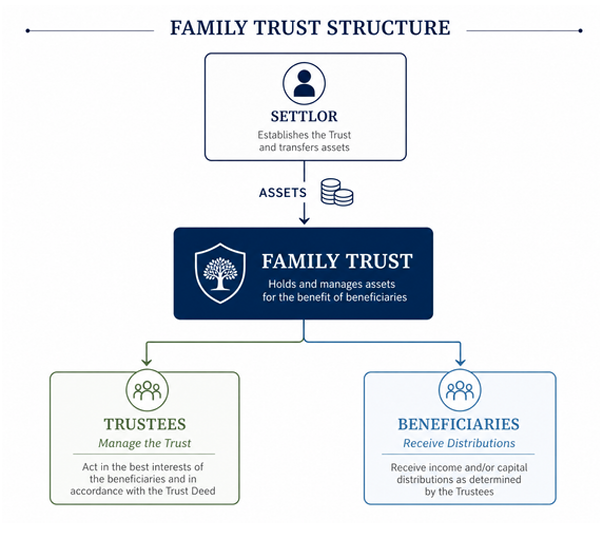
Family trusts have emerged as one of the most significant developments in wealth management and succession planning in Kenya. Kenya’s trust law operates within a multi-layered statutory framework. The Trustee Act, Cap. 167, remains the primary legislation regulating trustees’ powers, their appointment and removal from the positions. The Trustees (Perpetual Succession) Act, Cap. 164 facilitates the incorporation of trusts and defines the parameters of family trusts. It is worth noting that the current legal framework governing Trusts, built on colonial-era legislation, has long been recognised as inadequate for modern wealth management needs. Thus, the Trust Administration Bill, 2025, currently under consideration in Parliament, proposes to repeal both the Trustee Act and the Trustees (Perpetual Succession) Act and introduce a unified, transparent, framework.

Family trusts offer structured mechanisms for preserving wealth across generations and ensuring orderly succession outside the often protracted probate process. However, the very features that make family trusts attractive including flexibility, privacy, and asset protection, also create vulnerabilities that can be exploited. This article examines the principal loopholes in Kenya’s family trust regime and the legal remedies available to address them.

Loopholes in Kenya’s Family Trust Regime

a) Uncertain or Vague Trust Instruments

For a trust to be legally valid under Kenyan law, the trust instrument must satisfy three fundamental certainties: certainty of intention, certainty of objects (beneficiaries), and certainty of subject matter (trust property). These requirements, rooted in English common law serve as the bedrock upon which all valid trusts are constructed. Failure to meet any one of these certainties renders the trust invalid. The Trustees (Perpetual Succession) Act (Cap. 164) explicitly provides that a trust will not be valid if the terms of the trust are so uncertain as to render performance impossible.

Certainty of intention requires that the settlor’s clear and unequivocal intention to create a trust and transfer ownership of assets to trustees for the benefit of beneficiaries must be ascertainable from the trust deed. Where the intention is in doubt, the trust may be deemed a sham. Certainty of objects demands that the trustees be able to make a full and definitive list of beneficiaries at all times; if the beneficiaries are unascertainable, the trust fails due to uncertainty of objects. Certainty of subject matter requires that the trust deed clearly identify and list the assets constituting the trust property

Therefore, poorly drafted, ambiguous, or vague trust deeds can be exploited in several ways. A settlor seeking to retain control or obscure the true nature of the trust may deliberately craft vague provisions. Alternatively, trustees may exploit ambiguity to justify actions that benefit themselves or select certain beneficiaries at the expense of others. Beneficiaries, conversely, may challenge the trust on grounds of uncertainty to have it invalidated or force a redistribution of assets. In the case of In re Estate of Chadrakant Devchand Meghji Shah (Deceased) [2017] KEHC 8812 (KLR), the deceased made a will that created a testamentary trust by stating that the executors of his will should hold his estate for the benefit of his son and daughter.

However, the trust failed to indicate the assets that will constitute the trust fund and consequently it was unclear the amount of income that was to be obtained from the trust. The court found that even though there was certainty of intention and objects of the trust, the trust lacked certainty of subject matter and therefore the trust was held to be null and void.

Where a trust deed is found to be uncertain or vague, the trust may be declared invalid. A trust that fails due to uncertainty also loses the tax exemptions available under the Income Tax Act and Stamp Duty Act, exposing the assets to significant tax liabilities. Fundamentally, uncertainty invites litigation, as beneficiaries, trustees, and creditors dispute the interpretation of vague provisions. Lastly, vague trust deeds may grant trustees excessive discretion which can be abused to favour certain beneficiaries or to justify actions that do not align with the purposes of the trust.

The remedy for this loophole lies under Section 62 of the Trustee Act, Cap. 167 where the court has power to vary trusts in limited instances. However, where uncertainty is so profound as to render performance of a trust impossible, any interested party including beneficiaries, trustees or creditors, may apply to the court for a declaration that the trust is invalid and the court will exercise its discretionary powers in granting the orders.


a) Broad and Absolute Discretion of the Trustees One of the most significant loopholes in family trusts is the broad discretion often conferred upon trustees under trust deeds which in many cases is usually absolute leaving beneficiaries with limited ability to challenge the trustees’ actions. While such discretion is intended to enable trustees to administer trust assets efficiently and respond to changing circumstances, it can be abused

Trustees may make major decisions concerning trust property, investments or distributions without adequate consultation or disclosure to the beneficiaries. Although the Trustee Act grants trustees powers relating to investment, sale of trust assets, and management of trust property, it does not immunize bad faith where it arises among trustees. Trustees remain bound by fiduciary obligations to act in good faith, avoid conflicts of interest, exercise their powers for proper purposes, keep accurate accounts, and administer the trust strictly in accordance with the trust deed and the law.

The landmark case of Albert Kigera Karume & 2 Others v. George Ngugi Waireri & 2 Others (Milimani Civil Case No. 125 of 2015) offers a seminal judicial exposition of this loophole.


In that dispute, some beneficiaries of the late Njenga Karume’s multi-billion-shilling family trust accused the trustees of mismanagement, lack of transparency, failure to account for trust assets, exclusion of beneficiaries from information concerning the trust, and disregard of their welfare. While the High Court firmly upheld the validity of the trust structure and affirmed the founder’s right to appoint trustees of his choice, the Court emphasized that trustees are not beyond scrutiny merely because they possess wide discretionary powers. Justice Roselyn Aburili underscored that trustees are accountable to beneficiaries and must administer trust property diligently, transparently, impartially, and solely in the interests of the beneficiaries.

The Court ultimately ordered the removal of the trustees following the trust deed’s procedural mechanisms. The decision demonstrates that the remedy for abuse of trustee discretion is not the dissolution of the trust or transfer of trust assets directly to beneficiaries, as that would defeat the settlor’s intention. Rather, courts will intervene to enforce fiduciary duties, compel disclosure and accounting, and where necessary remove and replace trustees who have failed in their obligations. Beneficiaries can thus apply to the court for the removal of trustees who have breached their fiduciary duties.

a) Lack of Beneficiary and Dependants Protections

The intersection of Kenya’s family trust regime with matrimonial property and succession law reveals a significant loophole. Trusts can be strategicaly employed to disinherit spouses and dependants, effectively circumventing statutory protections.

Family trusts are increasingly utilised as estateplanning vehicles to facilitate intergenerational wealth transfer while avoiding the delays and publicity associated with probate proceedings. However, by transferring assets into a family trust during their lifetime, settlors can effectively disinherit heirs who would otherwise be entitled to a share of their estate. Section 26 of the Law of Succession Act provides for dependency provisions, but only against the deceased’s estate. Assets held in trust generaly fal outside the estate, so dependency claims may not reach them. This creates the possibility of spouses, children, and other dependants being deprived of property that would otherwise be available for distribution or for reasonable provision under succession proceedings.

Moreover, Section 6(2) of the Matrimonial Property Act, Cap. 152 expressly provides that trust property does not form part of matrimonial property. This statutory exclusion creates a powerful shield for assets placed in a family trust, as such property falls outside the scope of matrimonial property that would otherwise be subject to division upon divorce or dissolution While this provision is intended to preserve the integrity and independence of trusts, it also creates a potential avenue for abuse. A spouse may strategically transfer assets acquired during marriage into a family trust, thus placing them beyond the reach of the other spouse in the event of divorce or separation.

The PBO Act provides PBORA with enforcement powers across a tiered range of sanctions. Depending on the nature and severity of the non-compliance, an organization may face the issuance of compliance notices and corrective directives, financial penalties for late filing or failure to maintain records, suspension of operations pending investigation, cancellation of registration effectively shutting down the Organization, or personal liability for directors and officers in cases of gross misconduct.

A spouse or other dependent may challenge a trust as a sham or fraudulent conveyance where it was created to defeat their legitimate claims. In such cases, Courts are prepared to look beyond the formal structure of a trust where there is evidence that it has been established or utilised as a vehicle for fraud or to deliberately defeat of statutory rights. Thus, while placing assets in a trust can shield them from matrimonial property claims under the Matrimonial Property Act, the drafting must be robust enough to withstand a challenge that the trust was a sham or fraudulent conveyance.

A well-drafted trust deed should expressly acknowledge the interests of spouses and dependants and incorporate safeguards to prevent the trust from becoming an instrument of disinheritance. There should be full disclosure of any matrimonial property transferred into the trust and evidence of spousal knowledge or consent before such transfer is effected. This reduces the likelihood of subsequent claims that trust assets were improperly removed from the matrimonial estate. For dependants’ protection, the deed can provide for future children and dependants as beneficiaries.


Conclusion

Family trusts have become an indispensable tool for wealth preservation, succession planning, and asset management in Kenya’s increasingly sophisticated economic landscape. However, as this discussion demonstrates, the flexibility, privacy, and asset-protection benefits that make trusts attractive also create opportunities for abuse through vague trust instruments, excessive trustee discretion, and the potential exclusion of spouses and dependants from assets that would otherwise attract statutory protection The challenge for Kenyan law is therefore to ensure that they operate within a framework of transparency, accountability, and fairness. Through careful drafting, effective trustee oversight, robust beneficiary protections, and vigilant judicial intervention where abuses arise, trusts can continue to serve their legitimate estate-planning objectives while safeguarding the rights and interests of beneficiaries, spouses, dependants, and future generations. Ultimately, the continued development of Kenyan trust jurisprudence, coupled with the proposed reforms under the Trust Administration Bill, 2025, presents an opportunity to strike a balanced framework that promotes both wealth preservation and equitable justice.

Disclaimer : This publication is for informational purposes only and does not constitute legal advice.  For tailored legal support , kindly consult our team.

Article By: Frankline Ojanji
Associate Advocate


Screenshot from 2026-07-06 07-11-16

RECENT JURISPRUDENCE ON MATRIMONIAL PROPERTY AND ITS DIVISION IN KENYA

THE EMERGING POSITION OF THE SUPERIOR COURTS

Introduction

The law governing matrimonial property in Kenya has undergone significant transformation over the last decade, largely through interpretation of Article 45(3) of the Constitution, the Matrimonial Property Act, 2013, and the Marriage Act, 2014. The Constitution guarantees equality of rights between spouses during marriage and upon its dissolution, and it is because of this provision that Kenyan courts have had to grapple with the question of whether such equality translates into equal ownership and automatic equal division of matrimonial property.

Recent decisions of the Supreme Court and the Court of Appeal have clarified several contentious aspects of matrimonial property law, including the meaning of contribution, the effect of non-monetary contribution, the status of cohabitees, the retrospective application of the Matrimonial Property Act, and the principles governing apportionment of matrimonial property. The jurisprudence reveals a gradual movement away from the notion of automatic equal sharing and towards a contribution based on equity and fairness.


Constitutional and Statutory Framework Article 45(3)

of the Constitution provides that parties to a marriage are entitled to equal rights at the time of marriage, during marriage, and at the dissolution of marriage. The Matrimonial Property Act, 2013, was enacted to operationalise these constitutional guarantees. Of particular importance are:

Section 2, which recognizes both monetary and non-monetary contributions. The Act recognizes nonmonetary contributions, including:

a. Domestic work and management of the matrimonial home;

b. Child care;

c. Companionship;

d. Management of family businesses or property; and

e. Farm work. Section 6, which defines matrimonial property;

Section 7, which provides that ownership vests in spouses according to their contribution;

Section 14, which establishes rebuttable presumptions concerning property registered in the name of one or both spouses. The issue that the courts have been called upon to adjudicate has been reconciling Article 45(3)’s guarantee of equality with Section 7’s requirement that division be based on contribution


The Supreme Court’s Landmark Decision in JOO v MBO

The most influential modern authority is the Supreme Court decision in JOO v MBO & 2 others (Petition 11 of 2020) [2023] KESC 4 (KLR). In that case, the Court was called upon to determine whether matrimonial property should automatically be divided equally upon dissolution of marriage. The Court rejected the proposition that Article 45(3) creates a constitutional entitlement to a 50:50 division of matrimonial property. Instead, it held that equality of spouses does not equate to equality of interests in property rights. The Court stated that matrimonial property must be distributed according to the proven contribution of each spouse.

The Supreme Court further held that:

1. Article 45(3) guarantees equality of rights, not equal ownership of property.

2. Matrimonial property disputes must be determined on a case-by-case basis.

3. Courts must evaluate both monetary and non-monetary contributions.

4. There is no universal formula for the division of matrimonial property.

5.Evidence of contribution remains the essence of entitlement.


The decision effectively endorsed the contribution-based approach previously explained by the Court of Appeal in Echaria v Echaria (Civil Appeal 75 of 2001) [2007] KECA 504 (KLR). Although decided before the 2010 Constitution and the Matrimonial Property Act, Echaria continues to have considerable influence. This decision established the principle that a spouse claiming a share in matrimonial property must prove contribution to its acquisition. The Court rejected the English presumption of automatic beneficial ownership and insisted on proof of actual contribution.

Recognition of Non-Monetary Contribution

Despite rejecting automatic equal division, the Supreme Court has also enhanced recognition of non-monetary contributions. The Supreme Court acknowledged that contribution extends beyond direct financial input and includes domestic labour, child care, companionship, management of family affairs, and other forms of indirect support that enable wealth creation within the marriage.

This recognition is particularly important because many spouses, especially women, may not contribute directly to acquisition through income but facilitate the accumulation of family wealth through unpaid domestic and caregiving work. Accordingly, the current position is not that only financial contributions matter; rather, all forms of contribution matter, provided they can be demonstrated through evidence.

Presumption of Constructive Trusts
Marriage and A significant development emerged from the Supreme Court’s decision in MNK v POM & another (Petition 9 of 2021) [2023] KESC 2 (KLR). The Court held that the presumption of marriage as cohabitees remains an exception rather than the rule and should not readily be invoked merely because parties cohabited for a long period. The Court found that no marriage could be presumed in the circumstances of that case. However, the Court proceeded to recognize a constructive trust arising from the parties’ common intention and joint contribution to the acquisition and improvement of property. It consequently apportioned the property in the ratio of 70:30.

This decision demonstrates an important shift in that where a matrimonial claim fails due to absence of a legally recognizable marriage, equitable doctrines such as constructive trust and resulting trust may still provide relief where contribution is established.

Retrospective Application Matrimonial Property Act

Another issue addressed by the Supreme Court in the JOO v MBO case concerns the application of the Matrimonial Property Act, 2013. The Court held that the Act does not apply retrospectively to disputes whose causes of action arose before its commencement. Such disputes continue to be governed by the repealed Married Women’s Property Act, 1882, and other applicable constitutional principles.

However, the Court has clarified that constitutional values provided for in Article 45(3) may still inform the basis of the interpretation of pre-2013 disputes.

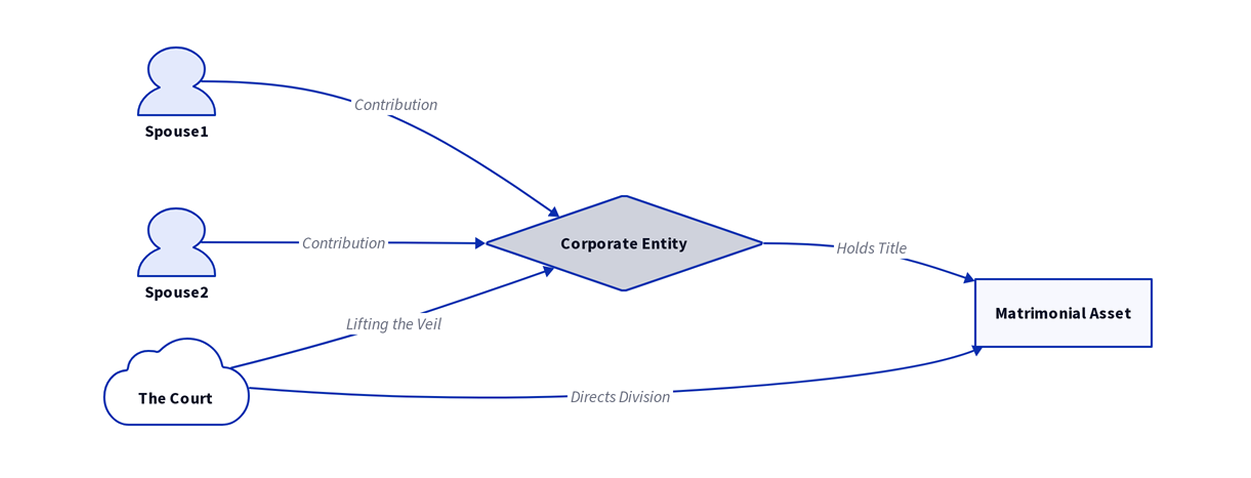
Matrimonial Property Corporate Structures

Held Through Recent Court of Appeal jurisprudence has also expanded the scope of matrimonial property by recognizing that spouses cannot evade matrimonial property claims merely by placing assets under corporate entities. Where shares or corporate assets are acquired during marriage and evidence demonstrates contribution by both spouses, courts have shown wilingness to look beyond the corporate veil. This development prevents the use of companies for defeating legitimate matrimonial property claims. This was explained by the Court of Appeal in GKW v RNK (Civil Appeal 605 of 2019) [2025] KECA 1475 (KLR) which held as folows.


“This Court in Lacheka Lubricants Ltd & Another v Chanandin & 4 Others (supra) went on to state:

“41.We are totally in agreement with the reasoning of the Court in PWK v JKG (supra). It would be totally unjust and unfair to deny the court jurisdiction to deal with a dispute involving distribution of matrimonial property, where the ownership of the claimed property is obfuscated through transfer of the property to a company which is either wholly controlled by the husband and wife as sole directors and shareholders, or by the husband as the main shareholder. In such situations, the corporate legal personality of the company is either obscured or deliberately ignored by the couple during coverture, and this requires the court to go behind the corporate veil to determine the actual beneficial ownership of the property. As stated in Muthembwa v Muthembwa (supra), section 17 of the Married Women’s Property Act gives the court wide powers to inquire into the company and the issue of ownership of the property and to make orders as the justice of the case may demand.” (Emphasis added)”

Conclusion and Emerging Principles
In conclusion, several clear principles can now be deduced from the recent decisions of the superior courts:

1. No Automatic 50:50 Division Article 45(3) guarantees equality of rights, not automatic equal ownership of matrimonial property.

2. Contribution Remains the Governing Test Distribution is determined according to the contribution of each spouse, whether monetary or non-monetary.

3. Non-Monetary Contribution Has Equal Legal Recognition Domestic work, child care, companionship, and management of family affairs are legally recognized contributions.

4. Each Case Depends on Its Facts No fixed formula exists for the distribution of Matrimonial Property. Courts have broad discretion to assess based on the evidence presented.

5. Equitable Remedies Remain Available Constructive trusts and resulting trusts continue to provide relief even where a formal marriage is absent. However, this is an exception rather than the general rule 6. Documentary Evidence Is Crucial Parties must keep records demonstrating both direct and indirect contribution to acquisition, development, or preservation of matrimonial assets.

How ESK Advocates LLP Can Assist

Matrimonial property disputes are among the most emotionally charged disputes in courts. As recent jurisprudence has shown, the outcome of such disputes depends on the quality of evidence presented regarding monetary and non-monetary contributions and the strategic application of various relevant legal principles. As ESK Advocates LLP, we are your best legal partner in such matters. At ESK Advocates LLP, we do not merely litigate such disputes but, most importantly, help clients protect what they have built and preserve what matters most.

Article By: Charles Chahilu
Associate Advocate

Screenshot from 2026-06-30 21-51-18

FROM BRICKS TO UNITS: A SPOTLIGHT ON REITS AS REAL ESTATE INVESTMENT OPPORTUNITY IN KENYA

1.Introduction : The Quiet Revolution in Kenya’s Property Market

For decades, real estate in Kenya has followed a familiar script: acquire land, build, wait for appreciation, or lease for income. It is a model built on patience, capital, and often significant risk. But the market is changing: rising interest rates, tightening liquidity, shifting investor expectations, and evolving regulatory frameworks are forcing a rethink of traditional property ownership. Investors are becoming more cautious. Developers are facing financing constraints. Institutional capital is seeking structured, regulated investment vehicles.

In this changing landscape, Real Estate Investment Trusts (REITs) are emerging not just as an alternative- but as a potential structural shift in how real estate is financed and owned in Kenya. Yet despite their promise, REITs remain underutilised. Why? The answer lies in complexity particularly around legal structuring, regulatory compliance, and governance. 2.REITs: More than just another Investment Vehicle At their core, REITs transform real estate from a fixed asset into a tradable investment. Rather than owning property directly, investors buy units in a trust that owns and manages real estate assets.

This creates:

i. Liquidity in traditionally illiquid assets;

ii. Diversification across multiple properties;

iii. Access to professional property management; and Lower capital entry thresholds

1.Introduction : The Quiet Revolution in Kenya’s Property Market REITs effectively democratise real estate investment, which concept has transformed property markets globally. This article explores the opportunity, the regulatory framework, and the legal considerations surrounding REITs in Kenya and why forward-thinking investors and developers should start paying attention.

2.REITs: More than just another Investment Vehicle

At their core, REITs transform real estate from a fixed asset into a tradable investment. Rather than owning property directly, investors buy units in a trust that owns and manages real estate assets.

This creates:

i. Liquidity in traditionally illiquid assets;

ii. Diversification across multiple properties;

iii. Access to professional property management; and Lower capital entry thresholds

1.Introduction : The Quiet Revolution in Kenya’s Property Market REITs effectively democratise real estate investment, which concept has transformed property markets globally.

The case for REITs in Kenya has never been stronger for these reasons: Capital constraints are reshaping i. development Developers are increasingly struggling to secure traditional financing and construction costs continue to rise while banks are tightening lending conditions. REITs provide an alternative which allows developers to:

Raise capital from institutional investors

Spread risk

Unlock value from completed developments

This is particularly relevant for mixed-use developments, student housing, industrial parks and affordable housing

ii. Institutional investors are looking for yield Pension funds, insurance companies, and asset managers are actively seeking stable, income-generating investments. For institutional investors, REITs offer regulated exposure to real estate without operational risk.

REITs provide:

Predictable income Long-term capital growth

Portfolio diversification

iii. Real Estate needs liquidity Traditional property investments are illiquid and slow to exit.

REITs, particularly those listed on the Nairobi Securities Exchange, allow investors to buy and sell units, creating liquidity in the real estate market. This shift has the potential to fundamentally change how real estate is viewed as an asset class.


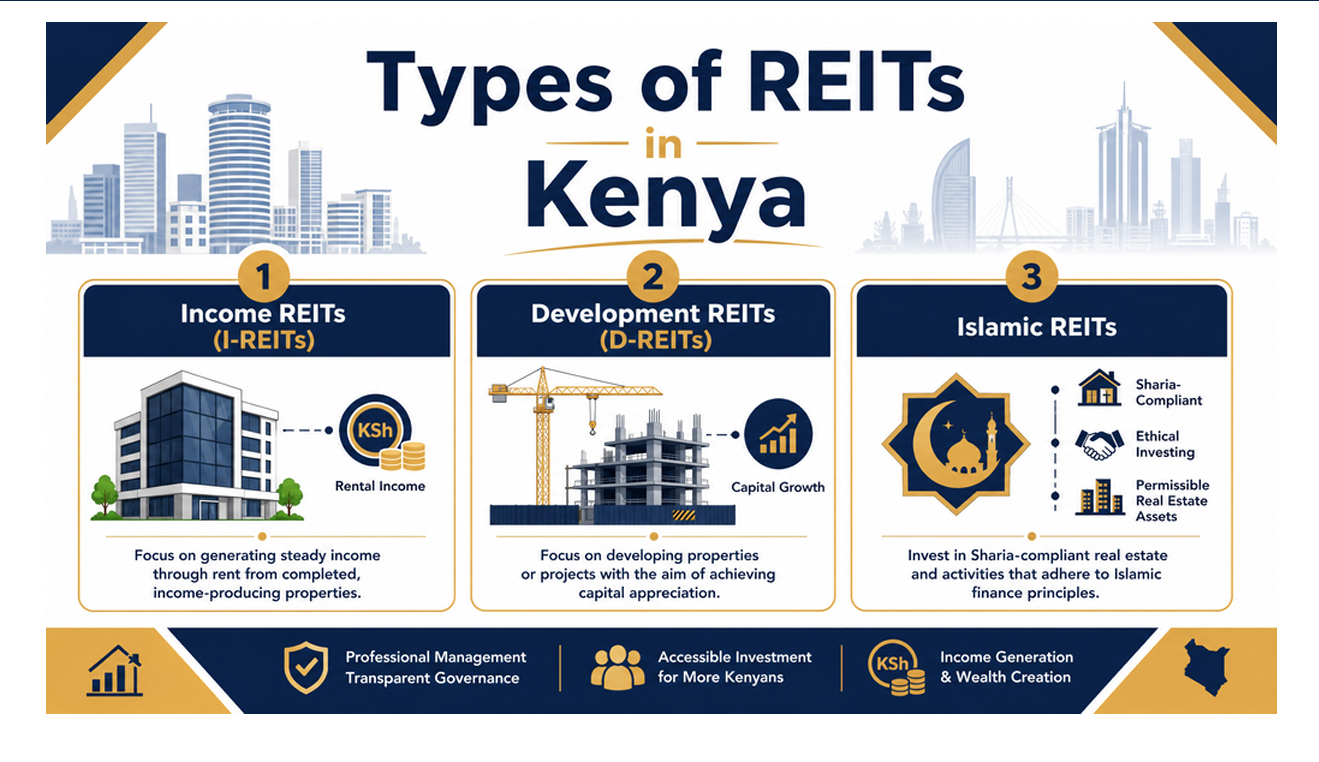
3.Types of REITs in Kenya: Understanding the Structures Kenya’s regulatory framework recognises three main REIT structures:

i. Income REITs (I-REITs)

These REITs invest in income-generating properties, such as: Office buildings, Shopping malls, Residential rental developments and Warehousing facilities. Investors receive regular income distributions from rental yields. These structures typically appeal to institutional and conservative investors.

ii. Development REITs (D-REITs)

Development REITs fund construction and development projects, Residential developments estates, and including: Mixed-use Commercial complexes. Returns are generated through: sale of units and capital appreciation. These structures offer higher returns but higher risk.

iii. Islamic REITs

Kenya also allows Sharia-compliant REITs, which exclude: interest-based financing and certain restricted sectors. These structures create opportunities regional and Middle Eastern capital


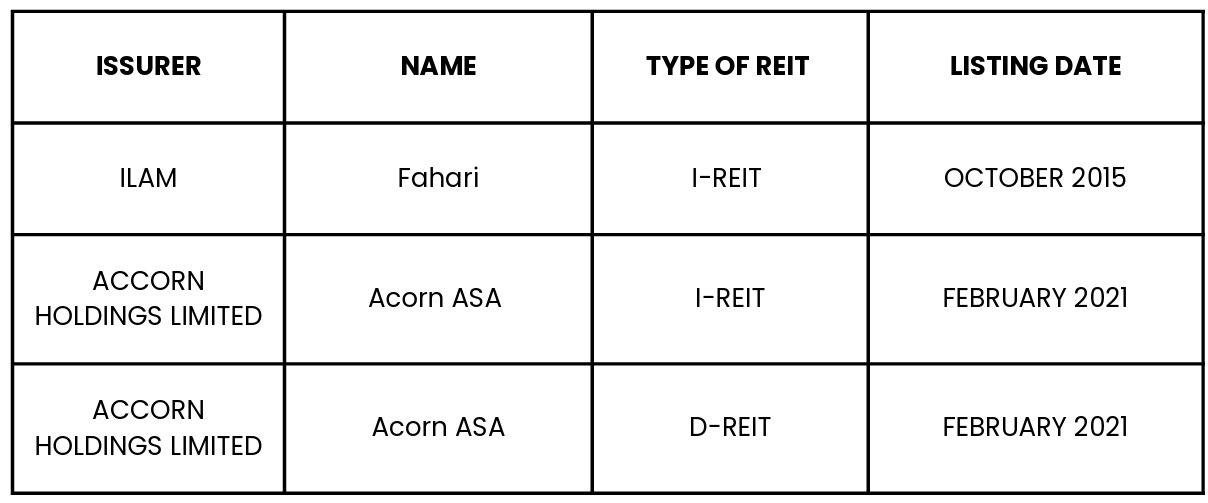
Current Kenyan REITs

4.The Legal Architecture of REITs in Kenya In Kenya,

REITs are regulated by the Capital Markets Authority (CMA), under the framework established by the Capital Markets Act and the Capital Markets (Real Estate Investment Trusts) (Collective Investment Schemes) Regulations. This regulatory oversight ensures: Investor protection, Governance transparency and Market stability. However, the above also introduces compliance obligations that require careful legal navigation.

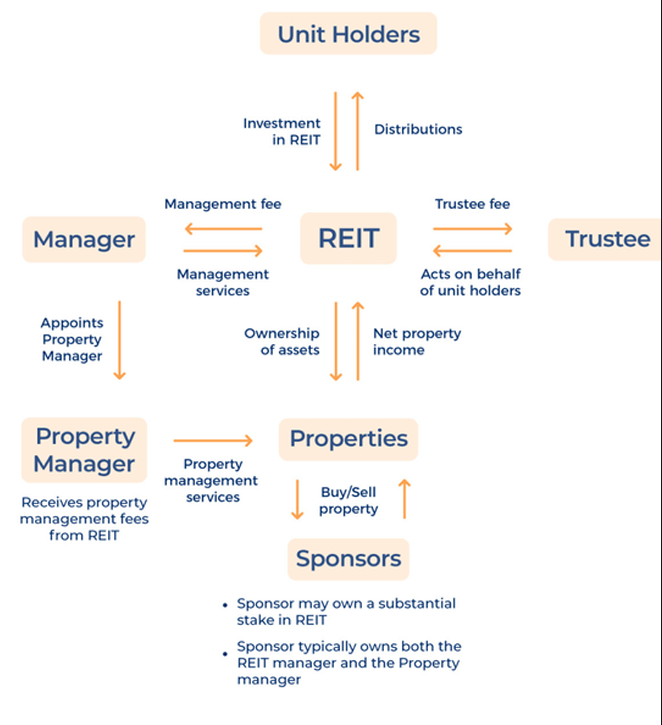
REITs are not simple investment vehicles. They require a multi-layered legal structure, typically involving:


i. Promoter

This is party involved in setting up a real estate investment trust scheme. The promoter is regarded as the initial issuer of REIT securities and is involved in making submissions to the regulatory authorities to seek relevant approvals.

ii. Trustee

The Trustee is a person appointed under the trust deed as a trustee of the REIT and any investee trust. The Trustee may be a bank, a bank subsidiary or a licensed company. A trustee shall—

be independent of the promoter, the REIT manager and any property manager, valuer or project manager certifier of the real estate investment trust scheme;
be licensed by the Authority as a REIT trustee;
be independently audited; and
have a minimum issued and paid-up capital and non-distributable capital reserves of at least one hundred million shillings;
Holds assets on behalf of investors; Ensures regulatory compliance; Oversees governance of the REIT.

iii. REIT Manager The REIT Manager is a company incorporated in Kenya and licensed by the Authority to provide real estate management services in respect of a REIT. In most cases, the REIT manager is appointed by the Trustee with the prior approval of the Capital Markets Authority.


The REIT manager is tasked to undertake the following duties: acquire, manage, maintain and dispose assets of the scheme; account to the trustee and the REIT securities holders for any loss suffered by the scheme; maintain on behalf of the trustee, proper accounting records and other record to enable an accurate view of the fund to be formed; obtain tenants and manage tenancy arrangements; carry out or cause to be carried out all property management functions in compliance with Estate Agents Act; implement approved budgets, capital works and maintenance programmes. iv. Property Manager The Property Manager is appointed by the REIT manager with approval of the Trustee and shall be supervised by the REIT manager to ensure their compliance with the terms of the scheme documents and law. The Property Manager may: Handle tenant relationships; Oversee maintenance; Manage operational performance.


5.Tax Efficiency: One of REITs’ Biggest Attractions REITs benefit from favourable tax treatment in Kenya. These include: i. Corporate Tax Efficiency MAY 2026 eskadvocatesllp.co.ke REITs may benefit from tax transparency structures, allowing income to pass through to investors. This enhances investment returns. ii. Stamp Duty Considerations Property transfers into REIT structures may qualify for stamp duty relief, subject to compliance. This is particularly attractive for portfolio consolidation, institutional investments and large-scale developments. iii. Withholding Tax Investor distributions may attract withholding tax, depending on investor type, residency status and structure.

6.Conclusion:

From Ownership to Investment- A Market Evolution REITs represent more than a financial instrument. They signal a shift in how real estate is owned, financed, and traded. For investors, REITs offer diversification and liquidity. For developers, they unlock capital. For institutions, they create stable returns. But unlocking these benefits requires careful legal structuring and regulatory compliance. As Kenya’s real estate sector evolves, REITs are poised to become a central pillar of the market. The opportunity is not just to participate; but to lead.

How ESK Advocates LLP Can Support REIT Clients MAY 2026 eskadvocatesllp.co.ke ESK Advocates LLP provides strategic legal support across the REIT lifecycle: Structuring and Formation REIT structuring Trust documentation SPV structuring Regulatory Compliance CMA approvals Governance frameworks Ongoing compliance advisory Transaction Advisory Property acquisitions Development structuring Joint ventures Tax and Risk Advisory Tax structuring Stamp duty planning Risk mitigation ESK Advocates LLP stands ready to guide investors, developers, and institutions through this evolving landscap

Article By: Teresia Wamaitha
Managing Partner