Screenshot from 2026-06-29 01-10-01

REGULATING CYBERCRIME IN THE DIGITAL AGE LEGAL ALERT APRIL 2026

International Trends and Lessons from the Kenyan Experience

Introduction

The rapid expansion of the internet and digital technologies has fundamentally transformed modern society. Communication, commerce, governance, and social interaction increasingly occur online. While these developments have created immense opportunities, they have also opened new avenues for criminal activity. Cybercrime ranging from online fraud and hacking to the spread of harmful digital contenthas become a global concern requiring coordinated legal responses.
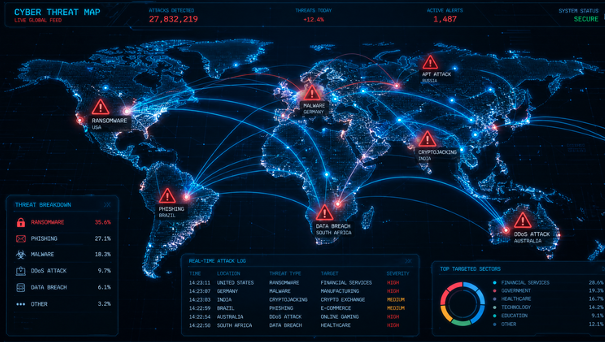
In recent years, the international community has intensified efforts to develop legal frameworks aimed at cybercrime. However, these efforts have raised important questions about the balance between combating cyber threats and protecting fundamental human rights. Courts across the world have increasingly been called upon to examine whether cybercrime laws go too far in restricting freedom of expression and digital rights. A notable example can be seen in the Kenyan case of Bloggers Association of Kenya (BAKE) v Attorney General & 6 others, which illustrates the challenges that arise when governments attempt to regulate online speech.

The Global Rise of Cybercrime Regulation

Cybercrime differs from traditional crime in one crucial respect: it rarely respects national borders. A cybercriminal operating in one country may target victims in multiple jurisdictions within seconds. This cross-border nature makes it difficult for individual states to effectively investigate and prosecute offences without international cooperation. Recognizing this challenge, international organizations have developed frameworks to harmonize cybercrime laws and facilitate cooperation between states. One of the earliest and most influential instruments is the Budapest Convention on Cybercrime, adopted by the Council of Europe in 2001.
The convention established common definitions for cyber offences such as illegal access to computer systems, online fraud, and data interference. It also introduced mechanisms for mutual legal assistance and investigation. cross-border Despite its importance, the Budapest Convention has faced criticism for being largely European in origin and lacking universal participation. Many developing countries were not involved in its negotiation and have therefore called for a more inclusive international framework

In response to these concerns, the United Nations has been working toward the adoption of a comprehensive UN Convention on Cybercrime. The proposed treaty aims to strengthen global cooperation, harmonize cybercrime legislation, and provide technical assistance to countries that lack the capacity to combat digital crime effectively.
The Human Rights Dimension of Cybercrime Laws

While cybercrime legislation is essential for protecting digital infrastructure and preventing criminal activity, it has also generated significant debate regarding its impact on fundamental rights. Laws intended to regulate online conduct can sometimes be drafted in overly broad terms, potentially criminalizing legitimate speech. Human rights organizations such as Amnesty International and Human Rights Watch have repeatedly warned that poorly designed cybercrime laws can be misused to suppress dissent, restrict journalism, or silence critics of government policies. Provisions that criminalize “false information” or “misleading publications” are particularly controversial because they may be interpreted subjectively.

This tension between cybersecurity and freedom of expression has increasingly become a central issue in international legal discourse. The challenge lies in crafting legal frameworks that effectively address cyber threats while maintaining respect for democratic values and human rights.

Lessons from the Kenyan Experience

The Kenyan case of Bloggers Association of Kenya (BAKE) v Attorney General & 6 others provides a useful illustration of these tensions.
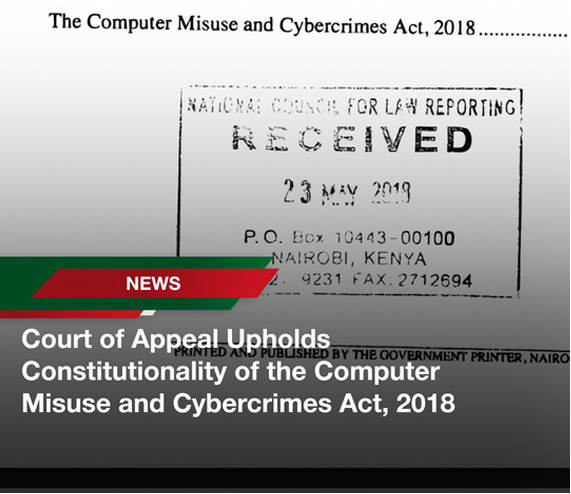
The case involved a constitutional challenge to certain provisions of Kenya’s cybercrime legislation that criminalized the publication of false or misleading information online. In its decision, the Court of Appeal of Kenya declared the contested provisions unconstitutional on the grounds that they were vague and overly broad. The court observed that such provisions could easily lead to arbitrary enforcement and might discourage individuals from participating in legitimate online discussions. The judgment reaffirmed that freedom of expression applies equally in digital spaces and that restrictions on speech must meet strict constitutional standards. Importantly, the court acknowledged the government’s legitimate interest in addressing cybercrime but emphasized that this objective cannot be pursued at the expense of fundamental rights. Although the decision was grounded in Kenya’s constitutional framework, its reasoning reflects broader global concerns regarding the regulation of digital expression.

Implications for International Cyber Law

The Kenyan experience highlights a critical issue confronting policymakers worldwide; how to design cybercrime legislation that effectively addresses criminal activity without undermining civil liberties. As countries continue to develop domestic cybercrime laws, courts will likely play an increasingly important role in reviewing their compatibility with constitutional and international human rights standards.

International instruments such as the proposed UN Convention on Cybercrime must also take these concerns into account. A successful global framework will need to strike a careful balance between empowering law enforcement agencies and safeguarding individual rights. Moreover, the international community must recognize that digital rights are an extension of traditional human rights. Freedom of expression, privacy, and access to information remain essential components of democratic societies, regardless of whether communication occurs offline or online.

Conclusion

Cybercrime presents one of the most complex legal challenges of the modern era. Its borderless nature demands international cooperation, coordinated legal frameworks, and technological expertise. At the same time, the regulation of cyberspace must remain consistent with fundamental principles of human rights and democratic governance. The case of Bloggers Association of Kenya (BAKE) v Attorney General & 6 others serves as an important reminder that courts can play a crucial role in maintaining this balance. By scrutinizing cybercrime laws and ensuring they comply with constitutional protections, judicial institutions help safeguard the freedoms that underpin open and democratic societies. As international efforts to regulate cybercrime continue to evolve, the lessons drawn from national experiences such as Kenya’s will remain valuable in shaping a more balanced and rights-respecting global approach to cybersecurity.

Article By: Daniel Munyoki
Associate Advocate


Screenshot from 2026-06-29 00-52-24

LEGAL AND REGULATORY COMPLIANCE LEGAL ALERT MAY 2026

Introduction
Kenya’s is undergoing its most significant legal transformation in three decades. The Public Benefit Organizations Act, 2013 (PBO Act) has replaced the long-serving NGO Coordination Act of 1990 as the primary legal framework governing non-governmental and nonprofit organizations operating in the country. For existing NGOs, this means restructuring. For new entrants, it means navigating an entirely new compliance terrain

Whether you are a philanthropist, a faithbased organization, a community group, a development agency or a corporate looking to set up a social impact vehicle, understanding the PBO Act is important. Any organization that raises funds, provides services, advocates for social change or operates for the public good without distributing profits likely falls within the scope of the PBO Act. Non-compliance exposes organizations and their leadership to de-registration, financial penalties and reputational risk.

A New Era: The Shift from the NGO Act to the PBO Act

For over 30 years, civil society organizations in Kenya operated under the NGO Coordination Act, Cap 134, a legislation that was, by most assessments, ill-suited to the complexity and scale that Kenya’s third sector had grown into.

The Act was narrow in scope, weak on governance standards and provided limited accountability mechanisms. The PBO Act marks a fundamental departure. It is designed around the principle that organizations serving the public benefit deserve both recognition and accountability to their donors, their beneficiaries and the Kenyan public. The key differences between the two regimes are significant. Under the old NGO Act, the sector was regulated by the NGO Coordination Board with a focus only on NGOs whereas the new law establishes the Public Benefit Organizations Regulatory Authority (PBORA), which has a broader mandate covering all civil society entities pursuing a public benefit purpose.

Registration under the old regime issued a simple Certificate of Registration. Under the PBO Act, organizations also receive a Certificate of Registration under Section 10 but one that carries far greater legal weight, conferring on the organization the status of a body corporate with perpetual succession, the capacity to own property, enter contracts and sue or be sued in its own name. Governance standards that were minimal or unenforced under the NGO Act are now mandatory, covering board structures, annual reporting and statutory audits. Financial disclosure requirements have been strengthened, and the penalties for non-compliance have been restructured to include a range of graduated sanctions rather than the blunt instrument of de-registration alone.

Who Qualifies as a PBO Under the New Law?

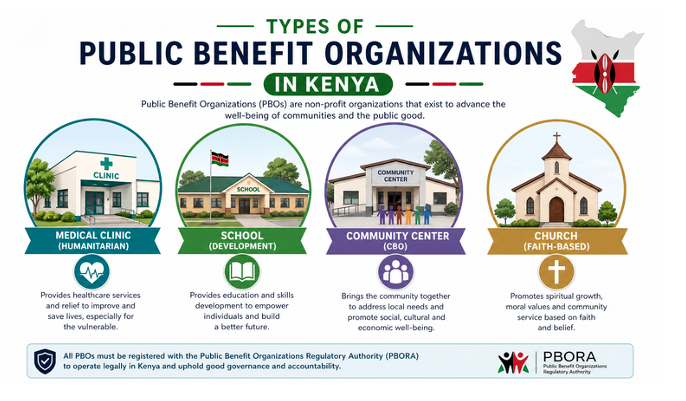
The PBO Act defines a Public Benefit Organization broadly as, any Organization that is voluntary, non-governmental, nonprofit distributing, self-governing and that carries out activities for the benefit of the public or a section of the public.

This covers a remarkably wide range of entities, MAY 2026 eskadvocatesllp.co.ke including Non-Governmental Organizations engaged in development, humanitarian or advocacy work; Community-Based Organizations with public benefit objectives; charitable trusts and foundations established for public purposes; faith-based organizations engaged in social service delivery; professional associations and networks operating for the public good; and research institutes and think tanks serving broader societal interests.

The Registration Process under the PBO

Registration under the PBO Act is administered by PBORA which is the regulatory body responsible for registration, monitoring compliance and maintaining the PBO register. The process is more rigorous than what many Organizations were accustomed to under the old NGO Act however, it is entirely manageable with the right preparation and guidance. The following steps outline the registration journey

Step 1: Name Search and Reservation

An applicant must reserve the proposed organization name before submitting a registration application. This is done via the eCitizen or the NGO Board portal at ngoboard.ecitizen.go.ke.

Step 2: Prepare Registration Documents

The Constitution is the cornerstone of your application. It must cover your public benefit objectives, governance structures, membership rules, financial management and dissolution clauses, all in compliance with Section 8 of the PBO Act. A poorly drafted governing document is the single most common cause of application delays and rejections. Other registration documents include, application forms 1, 2 and 3, the minutes, details of the officials, a proposed oneyear budget and other supporting documents.

Step 3: Additional documents for International PBOs

In addition to the general requirements above, international organizations must comply with the following: At least onethird of board members must be Kenyan citizens; Provide the constitutions of the organization’s foreign branches and evidence of governance structures abroad; Appoint a Kenyan authorized agent who is a Kenyan citizen resident in Kenya, duly authorized to receive official summonses, notices, and inquiries on behalf of the organization; Ensure that foreign staff hold appropriate immigration and work permits to operate in Kenya; and Registration fee for international NGOs: Kshs. 30,000/= (payable via eCitizen portal).

Step 4: Submit the Application

All the documents are submitted to PBORA for review. PBORA will assess the application against the requirements of the Act and may request additional information or clarification. A fee is payable on the e-citizen portal.

Step 5: Obtain the Certificate of Registration

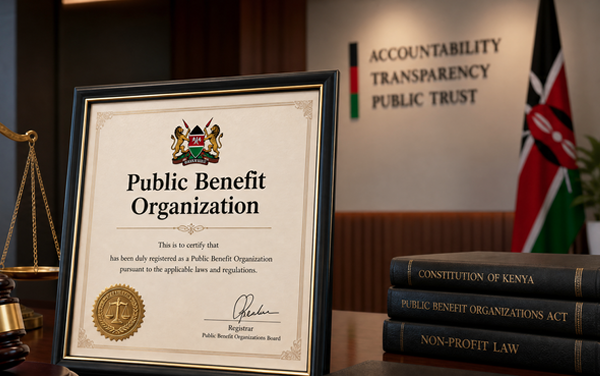
Upon approval, your Organization receives its Certificate of Registration under Section 10 of the PBO Act. This certificate is conclusive proof that the Organization has met all registration requirements, and it is duly registered under the Act, it is a body corporate with perpetual succession, and it is authorized to operate throughout Kenya as specified in its constitution or certificate.

Step 6: Tax and KRA

Registration Following registration, the Organization must register with the Kenya Revenue Authority for a PIN and apply for taxexempt status under the Income Tax Act. This step is critical and should not be delayed, as processing times can affect the Organization’s ability to receive and manage funds.

Step 7: Ongoing Compliance

Registration is the beginning, not the end. Annual returns, audited financial statements and public benefit reports must be filed with PBORA on a continuing basis. Appeals process under the PBO Act Section 17 of the PBO Act provides for review by the Authority and Appeal to the Tribunal. If an applicant is not satisfied with the decision of the Authority, they can apply for a review or an appeal.

The Act provides for PBO Tribunal which deals with appeals from the Authority’s decision. An applicant has 30 days in which they can appeal upon receiving a written notice of the decision. The PBO Tribunal has 60 days to hear and determine the appeal. The Tribunal may confirm, set aside, vary or quash the order or decision in question. Any party aggrieved by the decision of the Tribunal may appeal to the High Court and the decision of the High Court shall be final.

Key Compliance Registration

Obligations after The PBO Act imposes a range of ongoing compliance obligations that Organizations must meet to maintain their good standing with PBORA.

1. Annual Returns and Public Benefit Reporting

Registered PBOs must file annual returns with PBORA within six months of the end of each financial year. Returns include audited financial statements, a narrative public benefit report and disclosures on governance changes. These documents become part of the public record underscoring the Act’s emphasis on transparency and accountability.

2. Governance and Board Obligations

The PBO Act prescribes minimum governance standards. Board members must be fit and proper persons; conflicts of interest must be managed and disclosed; and boards must meet at least annually, with best practice recommending quarterly meetings. Failure to maintain proper governance is a standalone ground for deregistration.

3.Foreign Funding and International Partnerships

Organizations receiving funds from abroad must report these inflows to PBORA and, in some categories of activity, obtain prior approval before accepting such funds. The Act also empowers the Cabinet Secretary to impose limits on foreign funding for activities deemed sensitive to the national interest. This provision requires careful legal structuring particularly for Organizations with large international donor bases or those working in areas of advocacy or civic education.

4.Tax Compliance and KRA Obligations

PBOs are eligible for income tax exemption under Section 13 of the Income Tax Act but this status is not automatic. Organizations must apply to KRA and maintain ongoing compliance to preserve it. VAT obligations, withholding tax on payments and import duty exemptions each carry their own regulatory requirements that must be carefully managed throughout the Organization’s existence.

Penalties for Non-Compliance: What is at stake?

The PBO Act provides PBORA with enforcement powers across a tiered range of sanctions. Depending on the nature and severity of the non-compliance, an organization may face the issuance of compliance notices and corrective directives, financial penalties for late filing or failure to maintain records, suspension of operations pending investigation, cancellation of registration effectively shutting down the Organization, or personal liability for directors and officers in cases of gross misconduct.

The Act does establish an appeals mechanism through the PBO Tribunal, providing a structured dispute resolution pathway for aggrieved Organizations.

How ESK Advocates LLP can Help: Your PBO Legal Partner in Kenya

MAY 2026 eskadvocatesllp.co.ke Our firm provides end-to-end legal support to Organizations navigating the PBO Act. We work with founders, executive directors, boards and international donors combining regulatory expertise with practical commercial insight to help you build Organizations that are not only legally sound, but built to last.

We offer a comprehensive range of services tailored to the needs of PBOs and aspiring civil society Organizations. Our registration and incorporation service handles the entire PBO and NGO registration process from name search through to the Certificate of Compliance.

We draft bespoke Constitutions aligned with the PBO Act’s requirements and your specific mission. Our governance advisory work covers board structuring, governance policies, conflict-of-interest frameworks and board induction programs. On the tax side, we handle PIN registration and tax-exempt status applications with KRA, as well as ongoing tax advisory for PBOs. We conduct annual compliance audits to assess your organization’s standing against PBO Act obligations before regulators come knocking.

We also assist with the preparation of annual returns, public benefit reports and coordination of statutory audits. For Organizations with an international dimension, we advise on structuring and approvals for foreign donor funding within the PBO regulatory framework. And where disputes arise, we represent Organizations before PBORA, the PBO Tribunal and in court proceedings involving regulatory and compliance matters.

By : Joyce Nduta
Holding-Over Advocate